あらすじ
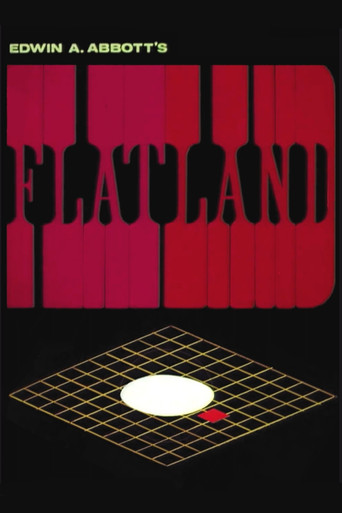
This highly original and entertaining short novel (which has been in print continually since its original publication in 1884) tells the story of A. Square, an inhabitant of the two-dimensional world Flatland. After an overview of Flatland society in all its aspects, A. Square recounts how he was led on a series of visions and travels to Pointland, Lineland, and Spaceland by A. Sphere on the last day of Flatland''s year 1999. Through his encounters with these other lands, A. Square realizes that there is indeed more to the universe than the world he lives in. A. Sphere opens A. Square''s mind to new possibilities, illuminating the path to knowledge through careful observation and commonsense experimentation. But when A. Square can be contented no longer with what he has already seen, he dreams of visiting a land of four dimensions, the so-called Thoughtland. As in real life, such desires are met with sometimes-violent opposition from society''s leaders in the name of maintaining the status quo. Victorian clergyman and Shakespearean scholar Edwin Abbott penned this mathematical allegory about the dawn of reason seemingly in response to the puritanical environment of his era. Touching on themes of humanity''s insatiable quest for truth, authority''s tendency to squash radical ideas born from this quest, and the necessity of curiosity, Flatland is an odd and charming little book whose impact far surpasses its concise prose.
作品考察・見どころ
エドウィン・アボットの『フラットランド』は、幾何学を武器に人間の偏見を刺し貫く傑作寓話です。二次元の住人が異次元に触れる過程は、価値観が崩壊する瞬間の恐怖と法悦を鮮烈に描いています。社会風刺を数学的秩序に昇華させた著者の才気は、時代を超えて読む者の知性を激しく揺さぶります。 映像版が視覚の驚異で次元を示す一方、原作は文字の抽象性で「見えない四次元」を想像させる深淵な体験を授けます。映像の具体性とテキストの思索的な余白が共鳴し、真理を追う者の孤独な闘争はより崇高に響くのです。知の限界を突破しようとする熱き魂の叫びを、その目でお確かめください。