あらすじ
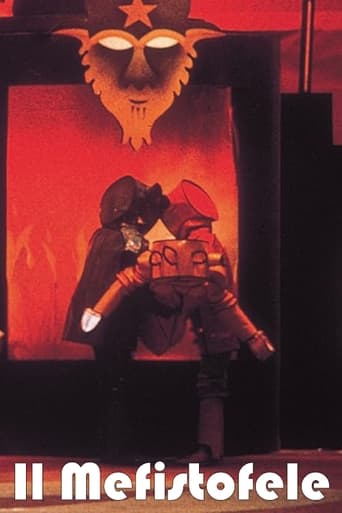
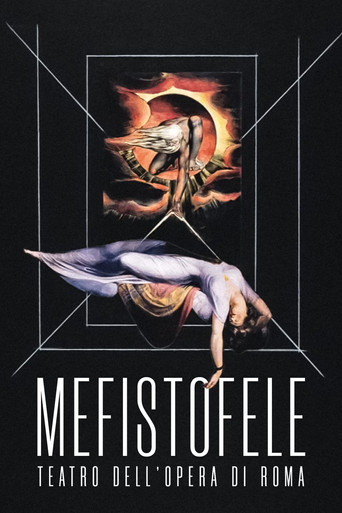
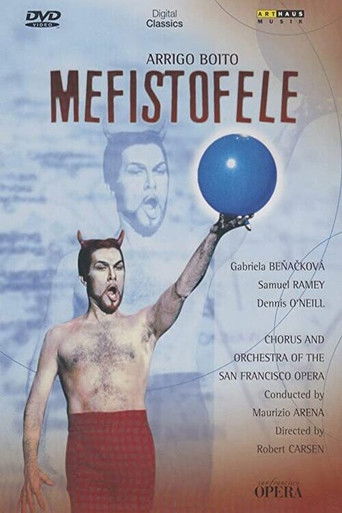
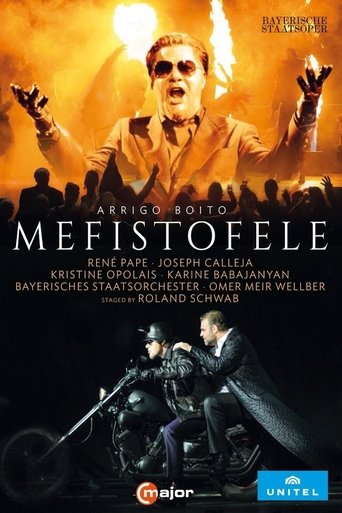
Excerpt from Mefistofele Opera in Four Acts The prologue takes place in the regions of space. Angels and cherubim sing the praises of the Creator. Mefistofele, half-way between heaven and hell, addresses a mocking song to the Omnipotent. He is on his way to earth to tempt the philosopher Faust, who is a man of great wisdom. Act I. Square in Frankfort. It is a festal day and students and girls are singing. Faust appears with his pupil Wagner. They notice a friar who keeps near Faust. The latter, noting his sinister appearance, declares that he must be the Devil. Seeking to escape him, they return to Faust's study. Faust sings of the beauty of nature. All at once the friar appears again. He drops his gray cloak and now stands revealed as the Evil One. Mefistofele bargains with Faust, the latter being careless as to the future. For Faust's soul it is agreed that he is to be given youth and one hour of genuine happiness. Act II. Margaret's garden. Here Faust walks with Margaret while Mefistofele entertains Martha, the girl's mother. Faust wants to meet Margaret alone, and in order to prevent discovery the mother is given a sleeping powder. Faust ardently wooes and wins the girl. Mefistofele finally warns the lovers that it is time to depart. He now takes Faust to the top of the Brocken where the philosopher sees all the revelry of Hades. The demons dance in wild acclaim while the fire bursts from the awful depths. All Hell proclaims Mefistofele its master and he is given a crystal ball that represents the Earth. Faust is terrified at seeing Margaret down in the rocks bound by red-hot chains. Act III. A prison. Here Margaret lies on a bed of straw. She has been convicted of murdering her babe. About the Publisher Forgotten Books publishes hundreds of thousands of rare and classic books. Find more at www.forgottenbooks.com This book is a reproduction of an important historical work. Forgotten Books uses state-of-the-art technology to digitally reconstruct the work, preserving the original format whilst repairing imperfections present in the aged copy. In rare cases, an imperfection in the original, such as a blemish or missing page, may be replicated in our edition. We do, however, repair the vast majority of imperfections successfully; any imperfections that remain are intentionally left to preserve the state of such historical works.
![Simon Boccanegra [The Metropolitan Opera]](https://image.tmdb.org/t/p/w342/wG8lsDbBYqpj7j3rmge1aBIKDEk.jpg)