A symbolic and cold coming-of-age film.
It subtly yet powerfully portrays the existential emptiness of youth, delving into the struggles and hollowness of adolescence through the lens of a high school student trapped in a chaotic, lawless, and violence-ridden environment.
Toshiaki Toyoda delivers a stark critique of an educational system that, rather than guiding and nurturing its students toward a better future, becomes complicit in their disillusionment.
Blue Spring is not your typical teenage film.
It’s a bleak poem about a generation growing up with no future, no direction, and no light. Watching it left me hollow—not because the film is empty, but because Kujo’s friends disappear one by one, like fresh leaves falling before they’ve even turned yellow.
Among all the characters, Kujo feels the most human.
He is calm, but that doesn’t mean he’s at peace. Beneath his cold exterior, his mind is filled with uncertainty. He wants to change, to grow, and maybe to live beyond mere survival. Amidst all the lost youths, Kujo is the only one who seems to be searching for direction—even if he’s still unsure where that is.
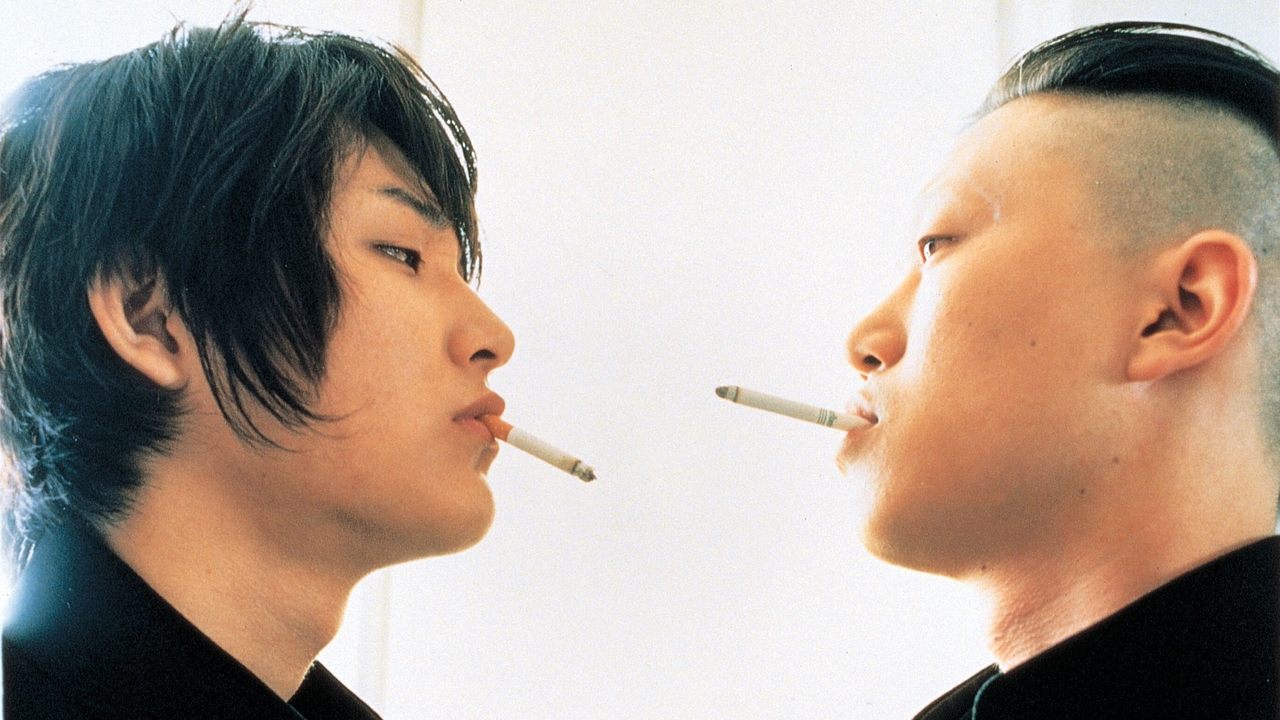
For me, the film’s peak lies in the tension between Kujo and Aoki, two once-close friends who drift apart as their paths diverge. It’s in this fracture that Blue Spring reveals its darkest truth: not all growth happens together, and not all friendships last through every direction life takes.
What struck me most is the way the school—supposed to shape a future— ends up a dim, guidance-less space filled with violence. It’s not just social critique; it’s a quiet scream against a system that fails to form human beings. A portrait of children growing up in a broken world, many of whom fade away simply because they weren’t strong enough to withstand it.
Visually and directionally, the film is poetic yet brutal— like a punk song whispered through cracked walls. The world depicted is nihilistic, yet strangely beautiful, like watching flowers bloom through broken concrete.
Blue Spring is a coming-of-age tale etched with scars.
Through Kujo, I glimpsed a faint hope trying to survive amid the moral and societal rubble. The film left me speechless long after the credits rolled, forcing me to reflect:
Are we destined to submit to a broken system?
Or can we learn to grow from within it, even as it collapses around us?