**It's a film that might scare modern audiences a bit, but it deserves the opportunity we want to give it.**
In addition to having a very strong film industry, Japan is a country with a very rich past that we in the West tend to devalue. A somewhat ethnocentric attitude, more typical of small minds. For a long time, the Japanese were a people divided by several feudal princes who fought among themselves, disputing power and regional influence. It was in this context, moreover, that the first contact between the Japanese and the Portuguese took place, the first Westerners to disembark, demonstrably (Marco Polo speaks of the Japanese, but he probably never went there), on the islands of Japan, where they took the first firearm, the Christian faith and a strong cultural influence: even today, in the Japanese language, there are hundreds of words directly imported from Portuguese.
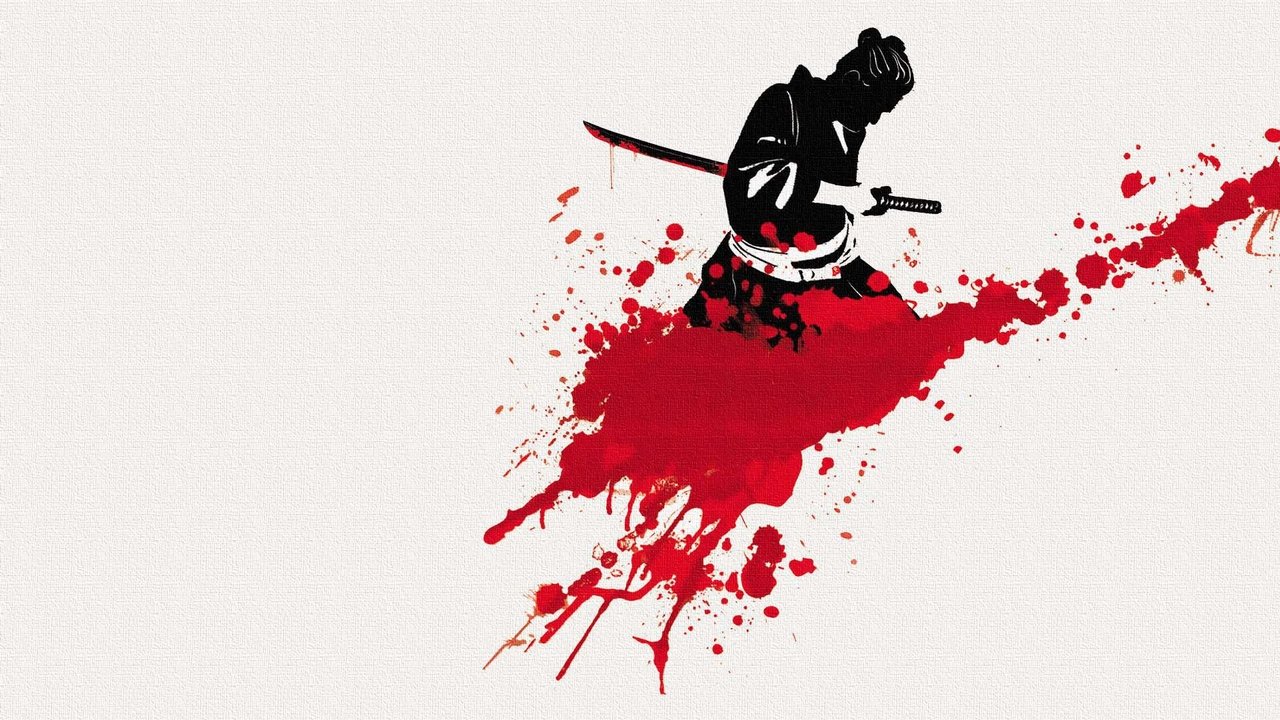
The film that brought me here tells us about one of the most fascinating traditional figures of Japan: the samurai, a warrior similar, in essence, to the European knight. They were educated people who were willing to live off the war, as paid mercenaries. In a land where each feudal lord wages war for himself, with his own troops and against his neighbors, it was not difficult to live off war. It would be difficult to live in peace! The samurai had a code of conduct, the Bushido, which dictated rules according to which they guided their lives, seeking to live and die with honor. Honor was more important than life and therefore, in certain situations, it was expected that the samurai knew how to die and was willing to do so, even if by his own hands, in a suicide ritual.
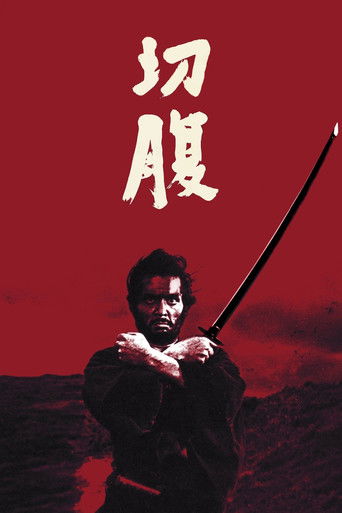
The film begins when a samurai, left unemployed by a long peace, turns to an old man and asks to be allowed to die. In response, he hears a story that occurred some time before, and in which a samurai in the same situation made an identical request in the expectation of receiving money, and ended up having to commit suicide, and with a wooden weapon. The film then reveals an important fact: this first samurai is the father-in-law of the man who killed himself, and who wanted money to feed his sick wife and son. And in fact that warrior is not there in order to simply die, but in order to avenge the son-in-law wronged by human hypocrisy.
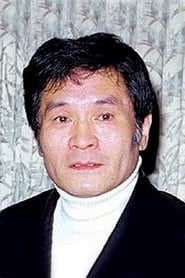
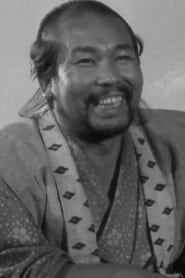
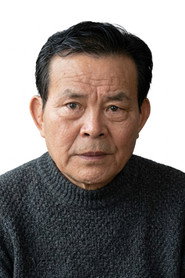
The film is quite dense, and the fact that it is so different from Western cinema and, even more so, in black and white, can quite scare the current public. However, it is worth resisting this impulse to reject it and giving the film a chance. It's very well done, it has a pretty good story, which is nothing behind big Hollywood hits. The script takes advantage of the situation to expose the brutality of the rigor imposed on the samurai by means of a moral code so absurdly demanding that it ended up being inhumane. Contrary to what happens in some films, even western ones, this film does a good historical contextualization of the story it tells us, not being too difficult to understand what is at stake. I'm not the best person to talk about the director or the actors, I don't know them, but I can say that we have the participation of Tatsuya Nakadai, Yoshiro Aoki and Akira Ishihama. On a technical level, I think it's impossible to avoid noticing the quality of the sets and filming locations, as well as the sharpness and quality of the cinematography.