Score: 10/10 A Singular, Unshakeable Vision of Nightmare Cinema
Eraserhead is not a film you watch; it is a film you survive. It is a descent into a world that feels both alien and uncomfortably familiar—a surrealist nightmare that operates on dream logic, industrial dread, and the visceral terror of parenthood. David Lynch's feature debut is a landmark of avant-garde cinema, a work so singular and uncompromising that it defies comparison. It earns a perfect score not because it is "entertaining" in any traditional sense, but because it achieves exactly what it sets out to do: it gets under your skin and stays there forever.
The Atmosphere: A World of Industrial Horror
From its opening frame, Eraserhead announces itself as something wholly unique. The film's world is a grey, grimy, industrial wasteland—a landscape of hissing pipes, buzzing lights, and a constant, oppressive mechanical drone. The sound design, by Lynch and Alan Splet, is as much a character as any of the humans on screen. It is a masterclass in auditory unease, a relentless assault of ambient noise that feels like the planet itself is in pain.
The black-and-white cinematography is stark and beautiful, evoking German Expressionism and film noir while remaining entirely its own. The visual compositions are meticulous, every frame a painting of despair and alienation. The world Lynch creates is one where the ordinary rules of reality do not apply, yet everything feels horrifyingly literal. It is a nightmare, but it is a nightmare that makes perfect, terrible sense within its own internal logic.
Jack Nance: A Performance of Suffocating Intensity
Jack Nance was amazing in this role. There is no other way to say it. As Henry Spencer, Nance delivers a performance that is simultaneously expressionless and deeply expressive. His face—with its pale, gaunt features, his hair standing on end like a man perpetually electrocuted—is a mask of quiet, bewildered suffering. He moves through the film with a kind of shuffling inertia, a man trapped in a world he cannot escape and barely understands.
Nance's physicality is extraordinary. He conveys so much with so little: the tilt of his head, the blank stare, the slow, defeated movement of his hands. He is every anxious parent, every overwhelmed soul, every person who has looked at their life and wondered how they ended up here. That he does all this without ever breaking into conventional "acting" is a testament to his singular talent. He is the beating, broken heart of a film that refuses to offer comfort.
The Baby: A Horror Beyond Words
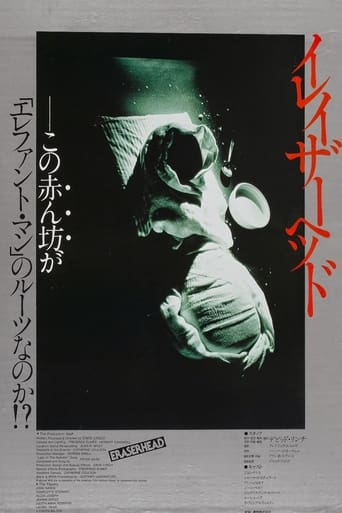
The baby is one of the most unforgettable, disturbing creations in cinema history. It is a grotesque, vaguely fetal creature that exists in a constant state of illness and distress. It is not a metaphor; it is a presence, a living embodiment of the terror and exhaustion of new parenthood. Its cries are unbearable. Its existence is a torment. And yet, there is a strange, tragic pathos to it. Henry's attempt to care for it, to soothe it, is both heartbreaking and horrifying. It is a portrait of responsibility as a slow, inescapable suffocation.
The Lady in the Radiator: A Moment of Grace
Amidst the darkness, there is the Lady in the Radiator. Played by Laurel Near, she appears to Henry in a dream, dancing on a stage inside a glowing radiator. She sings "In Heaven, everything is fine," offering a fleeting, surreal moment of beauty and solace. It is the film's only glimpse of relief—and even that is ambiguous, tinged with the knowledge that it is merely a dream within a nightmare.
The Ending: A Vision of Apocalyptic Liberation
The final sequence of Eraserhead is one of the most powerful in all of cinema. Without revealing too much, it is a moment of transcendence that is also a moment of annihilation. It is the film's thesis statement: the only escape from this world is to destroy it. It is not a happy ending. It is not a sad ending. It is an inevitable ending—a release that feels both catastrophic and serene.
The Verdict
Eraserhead is not for everyone. It is a film that demands patience, tolerance, and a willingness to surrender to its bizarre logic. It is not "enjoyable" in any conventional sense. But for those who connect with it, it is a transformative experience—a film that expands your understanding of what cinema can be. It is a work of pure, uncompromised vision, and it remains one of Lynch's greatest achievements.
10/10. It is a masterpiece. A singular, unshakeable, and brilliant nightmare.
Watch if: You are a fan of surrealist cinema, David Lynch, or films that challenge the boundaries of narrative and form.
Skip if: You require conventional storytelling, clear resolutions, or a film that leaves you feeling good. This is a plunge into darkness—and it is all the more powerful for it.