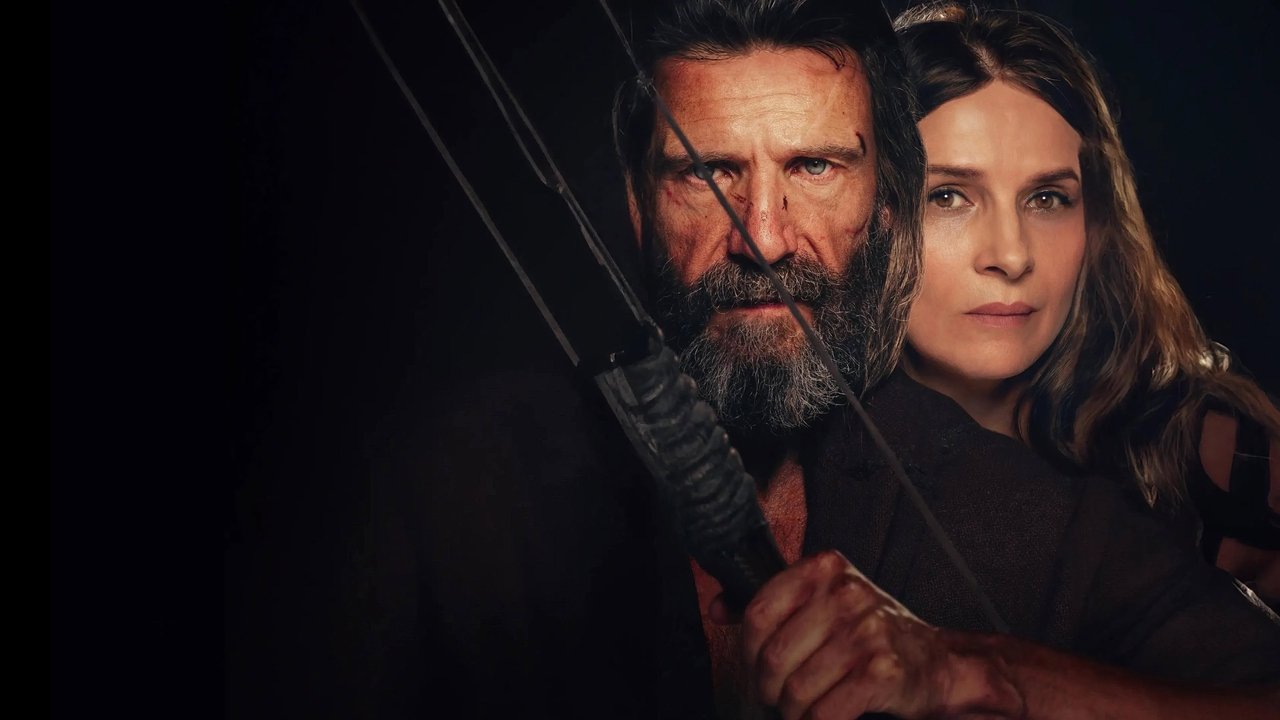
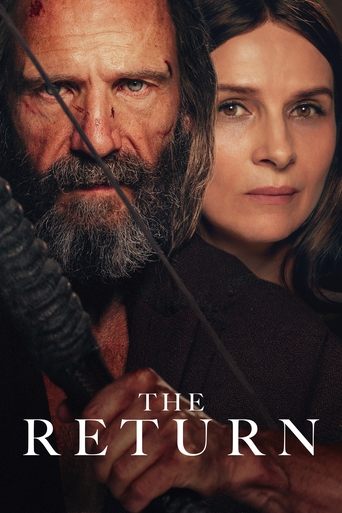
There something about this film that reminded me of “The Mission” (1986) as it simply depicts the rudimentary lives of the people on Ithaca many years after their King Odysseus (Ralph Fiennes) joined the forces of Agamemnon to fight the Trojan War. His wife, Queen Penelope (Juliette Binoche) has been struggling to raise their rather timid son Telemachus (Charlie Plummer) whilst being besieged by a slew of suitors who are convinced her husband is dead and want to marry their way onto the throne. When a man is washed up on the beach after a terrific storm, he is taken in by a friendly pig farmer who nurses him back to health and fills him in on the goings on in this now lawless and largely bankrupt kingdom. It’s pretty clear to us watching who he is, and the remainder of this drama illustrates the struggles of a man conflicted. Certainly, he wants to reclaim what once was his but he is also questioning whether or not he should, or even could, in the face of the scheming Antinous (Marwan Kenzari) who is fairly shamelessly using the safety of her son as leverage to be the one she chooses. Now if you are looking for a sword and sandals adventure, or anything you might have seen Ray Harryhausen animate, then this won’t be for you. It is a much more intense, personal, story of a man coming to terms with the ravages of time and war. There’s next to no sword play, no lions to fight or maidens luring him from to the rocks; indeed this whole story is entirely confined to the concluding phase of Homer’s epic that is solely based on the island. It’s also worth noting that Zeus, Apollo and their Olympian family do not feature at all in this history. It’s all told, bare bones, from the perspective of a character that Fiennes presents well enough, but for my money too theatrically. His less-is-more style coupled with a real paucity of dialogue and Uberto Pasolini’s borderline lethargic direction can make this an almost real-time and sluggish portrayal of an exhausted man, and exhausted population and an even more exhausted wife. On that last point, Binoche has precious little to say for herself throughout and though she looks the part, I didn’t think she was given enough to do to impose herself on the story until the very end, where the thing comes alive for a few moments - but again, in a very stage-bound fashion. The photography and locations do much to authenticate the story, as does the entire production design but given this project was thirty years from first page to first screening, too much objectivity had been lost to the labour of love that this clearly is for Fiennes and Pasolini and though it’s perfectly watchable, it’s just missing that something special.