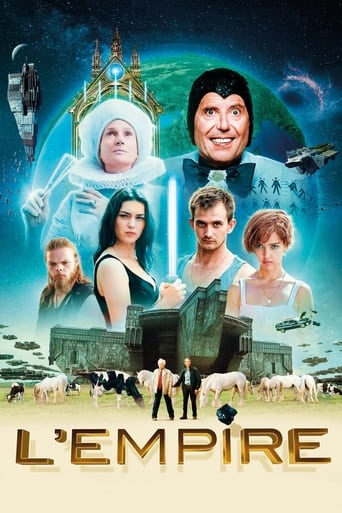
L'Empire
あらすじ
No synopsis available.
興行成績
製作費: $8,789,000 (13億円)
興行収入: $1,293,747 (2億円)
推定収支: $-7,495,253 (-11億円)
※製作費・興行収入はTMDBのデータを参照しています。収支は(興行収入 - 製作費)で算出したFindKey独自の推定値であり、広告宣伝費や諸経費は含まれません (1ドル=150円換算)。
No synopsis available.
製作費: $8,789,000 (13億円)
興行収入: $1,293,747 (2億円)
推定収支: $-7,495,253 (-11億円)
※製作費・興行収入はTMDBのデータを参照しています。収支は(興行収入 - 製作費)で算出したFindKey独自の推定値であり、広告宣伝費や諸経費は含まれません (1ドル=150円換算)。
監督: Bruno Dumont
脚本: Bruno Dumont
制作: Rachid Bouchareb / Muriel Merlin / Jean Bréhat
撮影監督: David Chambille
制作会社: Tessalit Productions / Red Balloon Film / Ascent Film / Novak Prod / Rosa Filmes / Furyo Films / Canal+ / Filmförderungsanstalt (FFA) / CNC / MiC / Centre du Cinéma et de l'Audiovisuel de la FWB / Eurimages / Instituto do Cinema, Audiovisual e Multimédia / Pictanovo / Région Hauts-de-France / Medienboard Berlin-Brandenburg / MOIN Filmförderung Hamburg Schleswig-Holstein / Regione Campania / Shelter Prod / RTBF / Taxshelter.be & ING / Ciné+ / Arte Cofinova 19 / Cofinova 18 / Indéfilms 11 / Film Commission Regione Campania
When a film seeks to tackle such distinctive comedic forms as parody, satire or slapstick, the creators first need to make sure that what they’re hatching truly works. But, in the case of this latest offering from storied auteur Bruno Dumont, the mark is missed by a wide margin. This alleged take-off on classic space operas like the original “Star Wars” trilogy or “Spaceballs” (1987) simply doesn’t cut it, primarily because it just isn’t funny. Perhaps that’s due to the fact that the filmmaker doesn’t seem to be clear on the direction he wants the story to take or the tone with which it’s presented. In a nutshell, two alien species – the Ones (champions of good) and Zeroes (disciples of evil) – have been exiled to Earth (why and by whom is never made clear), where they’re battling one another to win over the control of humanity through their ground zero strongholds in a small French coastal fishing village. But, in telling this tale, Dumont’s paper-thin narrative meanders aimlessly, blending a bland mixture of lame humor (most of which falls positively flat), bombastic but innately shallow soliloquies on the nature of good and evil, unexplained Monty Python-esque absurdist imagery, and gratuitous sexual encounters that appear to be thrown in for little more than titillating filler. To its credit, the picture effectively employs some truly impressive special effects, an eclectic background score based largely on reworked neo-classical arrangements of the compositions of J.S. Bach and Henry Purcell, and a production design that incorporates set designs drawn from Gothic and Renaissance European architecture. It also features a wealth of stunningly gorgeous cinematography, although a number of overlong shots (particularly many inexplicably filmed from too great a distance) could benefit from judicious pruning. So what exactly is the director going for here? Damned if I know. If it’s satire, its symbology is seriously undercooked. If it’s a campy romp, it’s too understated. If it’s screwball comedy, the pacing is too sluggish. And if it’s insightful social commentary, it’s too superficial and doesn’t take itself seriously enough. In essence, “The Empire” may offer some segments that are nice to look at, but that’s about all, considering that the bulk of this release, in the end, really has nothing interesting, meaningful or piquant to say.