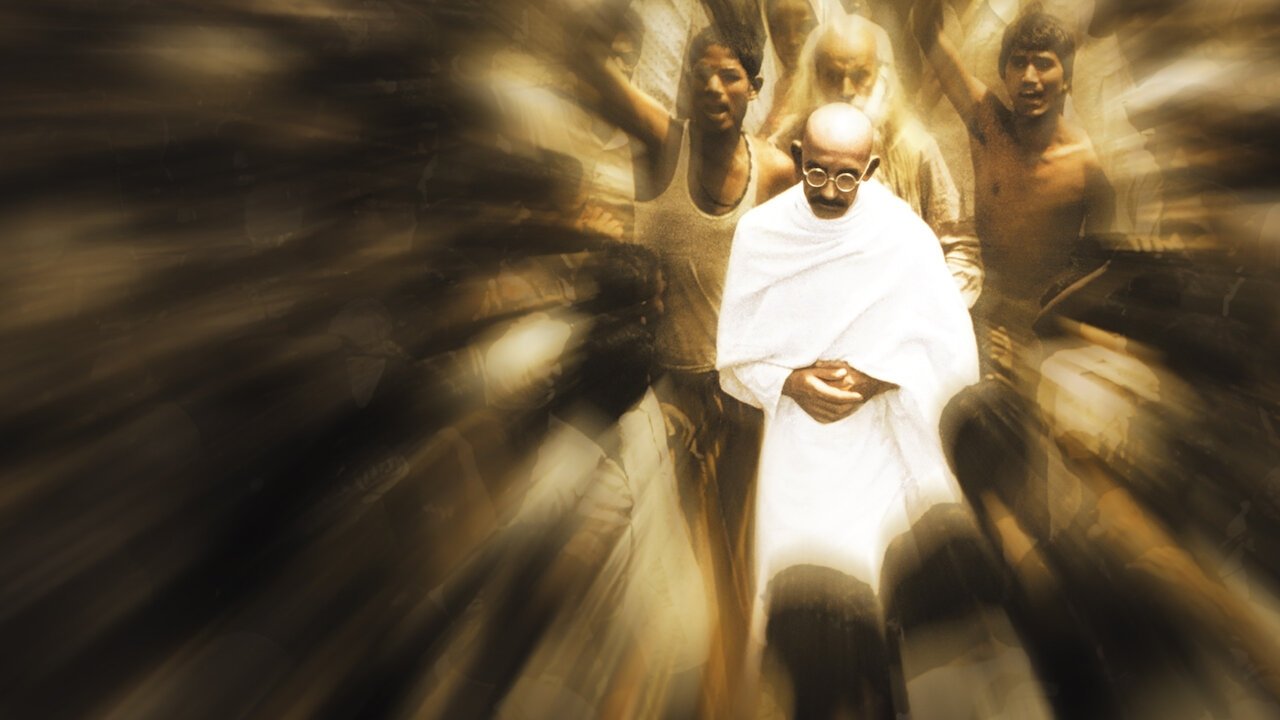
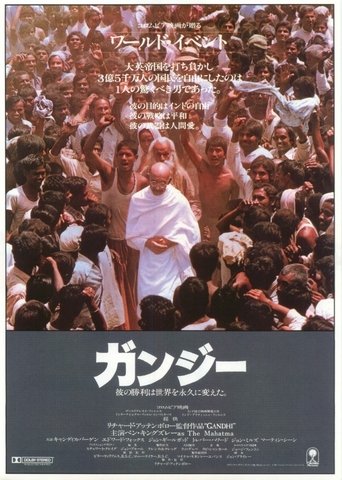
As career defining roles go, this has to one of the more masterful efforts from Ben Kingsley who manages to engage right from the start with his sprightly, intelligent and considered portrayal of this visionary and independently minded man of peace. Arriving in South Africa, his baptism into a sea of bullishness and racism quickly tests his mettle and soon has him on the radar of a General Smuts (Athol Fugard) government that was as yet unused to any sort of challenge from the non-white elements of society. Unafraid to take a beating, or to challenge the cultural norms without own his own caste-driven society, he is swiftly back in India where, flushed with a degree of success, he allies with Pandit Nehru (Roshan Seth) and becomes even more determined to use the sheer size of the dominated Indian population to rebel against the last vestiges of post war Raj. His strategy of non-cooperation sees him incarcerated and separated from those he loved but, again, his patience and determination made even the most formidable of his foes realise that this man was just a bit different - and that he was on a path to a victory that necessitated a dignified, but definite, retreat. The latter part of the story illustrates well that old adage about the difficulties of winning the peace, made more difficult by intolerances of an all together different nature, before a denouement that history dictated for all. Richard Attenborough told a story of his first meeting with Prime Minister Nehru when he was planning this film, and of how that ten minutes of courtesy ended up considerably longer and more beneficial to the look of this beautifully filmed biopic. Using grand scale cinematography that focusses on the vastness and variety of the country, but also using an intimate and really quite tough to watch style of photography as the brutish behaviour towards the colonised was clearly demonstrated. As to the exact nature of the history, I'm not sure that detail mattered so much as the overall assemblage of some of the great from British stage and screen who seemed, by themselves, to offer an heart-felt apology for what had gone on as the sun did start to set on the Empire. There features also a gently supporting effort from Geraldine James's Mirabehn and Candice Bergen also helps the narrative's chronology along as the photo-journalist never far from Gandhi's side. It's long and can be a little sluggish at times, but the sheer participatory nature of this is reminiscent of the epic cinema of the days when crowds were real, cheap, colourful and enthusiastic - and that all adds to the richness of this classy and stylish production. Big screen experiences don't come much more poignant and this is well worth a watch in a cinema if you can.