**A film that was enough for more than one review: dream, nightmare, utopia and reality.**
It was in 1939 that composer and singer-songwriter Ary Barroso released the iconic song “Aquarela do Brasil”. This samba became an icon of Brazilian music and was sung and disseminated by such noble voices as Francisco Alves, João Gilberto, Tom Jobim, Caetano Veloso, Tim Maia, Gal Costa, Erasmo Carlos, Elis Regina and, in English versions, Frank Sinatra and the Portuguese Carmem Miranda. Ary Barroso, however, never imagined that the mere sight of an elderly man, sitting on a beach on a rainy day while listening to his song, would end up inspiring Terry Gilliam to make a film. But, before these words can mislead anyone, and especially any Brazilian, it is necessary to clarify that the film has nothing to do with Brazil.
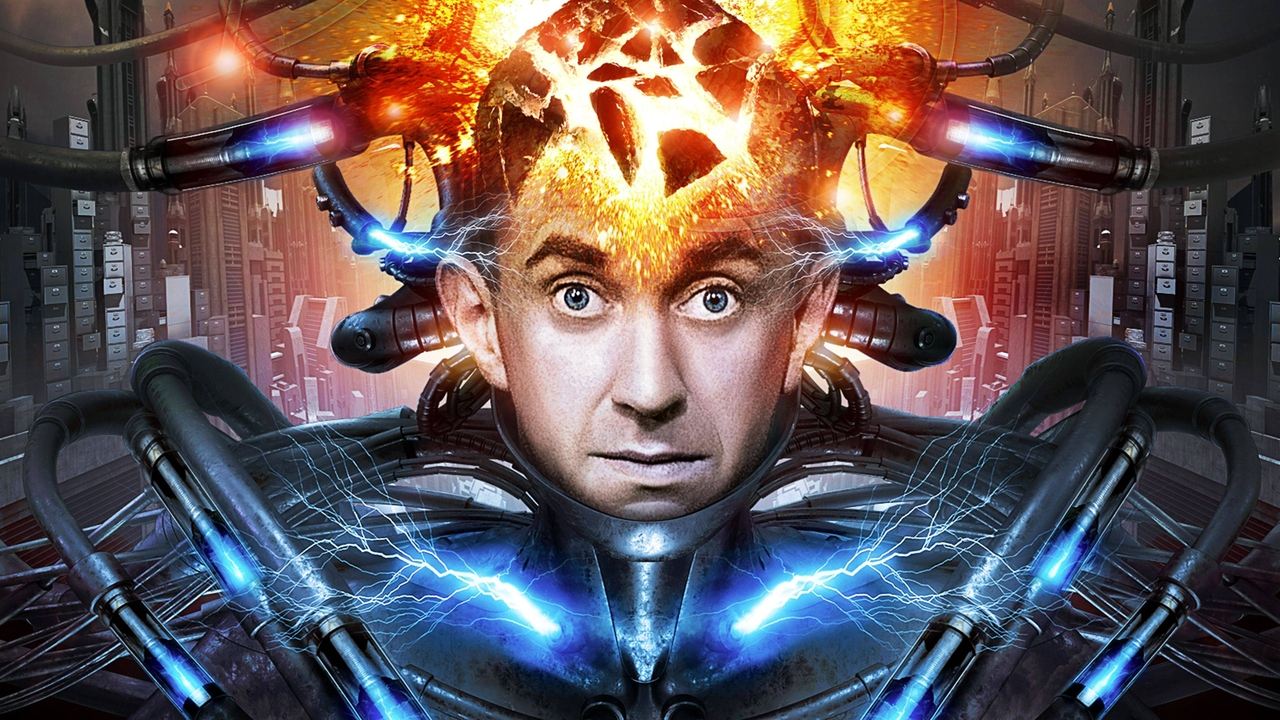
The film takes place in an unnamed country that lives under a dictatorship (okay, Brazil was a dictatorship when the film was released, but the similarity ends there). The government, obsessed with controlling information, has created a monstrous and highly ineffective bureaucratic system that makes fatal mistakes. It is because of one of these mistakes that a citizen is arrested and killed as a revolutionary, mistaken for the real fugitive. And so we meet Sam Lowry, a government official with a conventional life who is plagued by dreams where he flies like a bird and saves a damsel in distress. His life changes precisely when he meets a woman like the one in the dream and finds that she, too, is in danger of being arrested for another mistake.
I haven't seen both movies, but I believe the critics who said there were similarities between this movie and "1984". I myself could see the similarities with “Metropolis”, either in the narrative or in the bizarre and exaggerated visual aspects. As in those films, we have a dystopian, totalitarian society, where the individual is stripped of his humanity and becomes a cog in a larger gear, serving the State. Of course, the film weaves a long and judicious critique around this, and the bureaucracy that the country sustains, and which is of little practical use. It also offers us some sharp criticisms of the futile needs and vanity of today's society. The big problem is that all this seems to have no meaning. In fact, the main plot ignores these issues: Sam, the main character, is not a revolutionary nor does he seem to have political ideas. In fact, if you look closely, he seems to act almost on instinct, living his life as if it were a dream. The main plot is underutilized and poorly harmonizes with the rest of the film, as if it conflicts with the visuals and the other points of the script.
Gilliam made an original film. Where he failed was in the harmonic conjunction of the pieces in his work. And of course, in the relationship with the studios, which almost forced him to accept a radical cut in the film, considered excessively long and expensive. In fairness, I can understand both sides: the studios were trying to monetize an investment and rationalize expenses; for his part, Gilliam did not want his creative work done in pieces, although it is clear where the money was spent: just look at the incredible visuals, the dreamlike way in which he expresses himself as a director. Jonathan Pryce is the featured actor playing Sam. He gives us a work of great quality and is very well assisted by Katherine Helmond, in a very interesting sarcastic role, and Kim Greist, his romantic partner. The film also features the participation of great actors of the time, namely Bob Hoskins, Jim Broadbent, Barbara Hiks, Ian Holm, Michael Palin and Robert De Niro. This perhaps shows the prestige and consideration that the artistic world already had for Gilliam: the actors, more than having a good salary, wanted to work with him.
All of this is very nice, but why is the film called Brazil, and why did I mention it in a song? I was also thinking about this for some time, it really is something that does not seem understandable at first glance. I saw the film and nothing seemed to give me the answer to the choice of title, except the insistence on the song, which is the skeleton on top of which the film's soundtrack was assembled. But perhaps Gilliam was trying to show us, through this song, the dreamlike utopia of Sam's dream compared to the fantasies of others and the dystopian reality of his life.