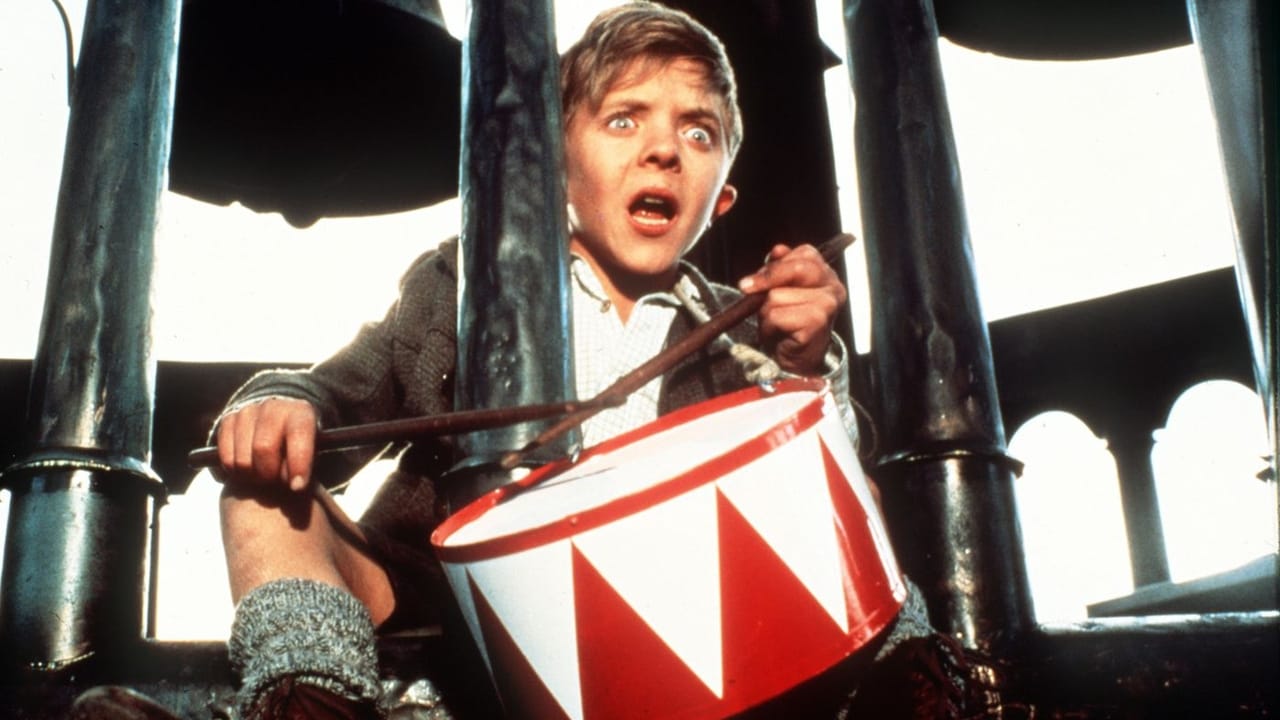
A smart movie powered by David Bennent's performance
Oskar is a young man in World War II Germany who refuses to grow up when he was three years old. He deliberately let himself fall on a stair to injure himself and stop his growth. Oskar's refusal to grow and release his tin drum is an obvious metaphor about refusing the Nazi regime. This is made more obvious since he finally decided to grow and let go of his drum after the Nazi's defeat.
The Tin Drum is based on a celebrated novel by German author Gunter Grass. Director Volker Schlöndorff brings it to life with profound elegance and intellectual humor. Made in 1979, in the middle of the German film renaissance, The Tin Drum pokes fun at the Nazi regime and at the same time presents an unforgettable and often hilarious story.
The movie begins in the late 19th century when Oskar's grandmother helps his grandfather to escape German soldiers by letting him hide under her skirt. It is also where Oskar's mother Agnes (Angela Winkler) is conceived. Agnes grows up during the First World War and marries a man named Alfred Matzerath (Mario Adorf). She begins to have an affair with her cousin Jan Bronski, while Oskar slowly becomes aware of their relationship.
David Bennent's performance as Oskar is simply amazing. He was about 12 years old at the time, and he plays Oskar from childhood to his 20s. Although Oskar's physical appearance never changes. We can see his aging process through Bennent's performance. Oskar's movement changes; he begins to become more mature and discover the world around him. Bennent plays the character with an impressive level of believability and intellectual maturity.
The Tin Drum reminded me of one of my favorite movies-Forrest Gump. Both movies have central characters that are physically and mentally disabled, and both manage to have an interesting journey life. Both movies pass through an important historical event, with both heroes getting involved. The Tin Drum is not quite in the same league as Forrest Gump, but it still amazed and captivated me from beginning to end.
The Tin Drum contains some really grotesque scenes. One scene in particular is when they show a fisherman using a dead horse's head as bait for eels. The fisherman removes the eels one by one from the horse's head, while Agnes vomits in disgust. To balance it out, the movie also contains moments of pure joy. I love the sequence where Oskar's drumming influences a band to change their music form a German march to Strauss' The Blue Danube. A Nazi officer screams in disgust, while the crowd joins together and dances.
I enjoy watching intelligent satires. I laughed out loud a lot of times in this movie and I relished its lush story. The movie deals with many things, including warfare, adultery, and religion. It may be a little too long for some people at 140 minutes, but for me, no good movie is too long. The Tin Drum contains astonishing images powered by remarkable acting.