FindKey

FindKeyは、100万件を超える映画・ドラマ作品、そして数百万人の人物データと独自の16類型CTI診断を統合した、日本初の感情特化型映画レコメンドエンジンです。

Find (見つける) + Key (鍵・正解)

映画に限らず、人生のヒントを見つける場所です。

FindKeyについてロケ地 (試験中)利用規約プライバシーポリシーお問い合わせ
© 2026 Bennu Inc.TMDB Logo

本サービスはTMDB APIを利用していますが、TMDBによる推奨・認定を受けたものではありません。

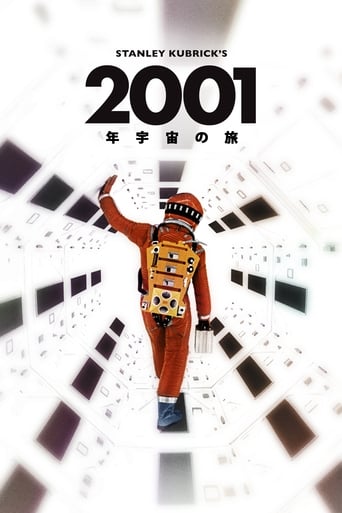
2001年宇宙の旅
2001年宇宙の旅

2001年宇宙の旅

“それは、未だ究極の旅”

19682h 21m★ 8.1サイエンスフィクション謎アドベンチャー

あらすじ

スタンリー・キューブリックがA・C・クラークのアイディアを基に製作したSF映画の金字塔。 月に人が住むようになった時代。月のティコクレーターの地中からの謎の石碑「モノリス」が発掘され、合衆国宇宙評議会のフロイド博士が調査に向かう。それから18カ月後、最新型人工知能「HAL 9000型コンピュータ」を搭載した宇宙船ディスカバリー号は、デビッド・ボウマン船長、フランク・プールら5人のクルーを乗せて木星探査に向けて航行していた。しかし、その途上でHALが探査計画に対して疑問を抱いていることを打ち明ける。ボウマンとプールはHALの不調を疑い、いざというときはHALの回路を切断することを決めるが、それを知ったHALは反乱を起こす。

作品考察・見どころ

スタンリー・キューブリック監督が創造したこの極限の視覚体験は、台詞を削ぎ落とし、音楽と映像の融合によって人類の根源的な問いを揺さぶります。CGのない時代に構築された、緻密で幾何学的な美術と圧倒的な静寂は、単なるSFの枠を超え、観る者を宇宙の深淵へと誘う崇高な芸術へと昇華されています。 冷徹な意志を持つ人工知能HALとの対峙や、時空を越えた変容の描写は、テクノロジーの極地と生命の進化を鮮烈に提示します。全編を貫く「沈黙の雄弁さ」が、我々の想像力を宇宙の果てまで拡張させるのです。これこそが映画という媒体が到達した、究極の「体験」と呼ぶにふさわしい不朽の傑作です。

興行成績

製作費: $12,000,000 (18億円)

興行収入: $71,923,560 (108億円)

推定収支: $59,923,560 (90億円)

※製作費・興行収入はTMDBのデータを参照しています。収支は(興行収入 - 製作費)で算出したFindKey独自の推定値であり、広告宣伝費や諸経費は含まれません (1ドル=150円換算)。

口コミ

あなたの評価を記録する

Amazon Prime Video
U-NEXT
HBO Max on U-Next

予告・トレイラー

配信サービス

サブスクリプション

Amazon Prime Video
U-NEXT
HBO Max on U-Next
Amazon Prime Video with Ads

レンタル・購入

Amazon Video
Apple TV Store
Google Play Movies

キャスト

Keir Dullea
Keir Dullea
Dr. David Bowman
Gary Lockwood
Gary Lockwood
Dr. Frank Poole
William Sylvester
William Sylvester
Dr. Heywood Floyd
Douglas Rain
Douglas Rain
HAL 9000 (voice)
Daniel Richter
Daniel Richter
Moonwatcher
Leonard Rossiter
Leonard Rossiter
Dr. Andrei Smyslov
Margaret Tyzack
Margaret Tyzack
Elena
Robert Beatty
Robert Beatty
Dr. Ralph Halvorsen
No Image
Sean Sullivan
Dr. Roy Michaels
No Image
Frank W. Miller
Mission Controller (voice)

スタッフ・制作会社

監督: スタンリー・キューブリック

脚本: アーサー・C・クラーク / スタンリー・キューブリック

制作: スタンリー・キューブリック / Victor Lyndon

撮影監督: Geoffrey Unsworth

制作会社: Stanley Kubrick Productions / Metro-Goldwyn-Mayer

TMDB ユーザーのレビュー

markuspm
markuspm

There are many great predictions hinting to future (it is from 1968 - can you believe it?) innovations throughout the movie. I might not have found all them because I keep falling asleep while watching it but I will keep trying to find them all.

izgzhen
izgzhen
★ 8

I believe that we should call it a modernism show, albeit exhibited in the form of a movie. While it might feel "boring", it forces you to rethink what philosophical level that a two-hour film can achieve. The focus on questions about life, intelligence, and time, is worth more attention than the sci-fi part (though the special effect of this movie is already way ahead of its time).

tmdb47633491
tmdb47633491
★ 10

The eighth wonder of the world. Easily 30+ viewings since I was a little kid. Nothing new to say here; simply wanted to add another pair of hands to the ocean of applause for my absolute favorite thing, the only indisputably perfect movie, the answer to the question of Is Life Worth Living, Man's greatest achievement, two thousand one a burger-flipping space odyssey

Per Gunnar Jonsson
Per Gunnar Jonsson
★ 6

I got this movie recently when it came out on Ultra HD Blu-ray simply because it was missing in my collection and, being a Sci-Fi fan, missing 2001 in my collection simply would not do. It is a movie that was made to rely almost entirely on the visuals. It could be said that it is a visual symphony if that makes sense. Thus it was filmed on 70 mm film and in 6 channel stereo which, at the time was a huge thing. Thanks to this it actually made some sense to transfer this movie to Ultra HD Blu-ray since the originals were really good enough even though the movie was made in 1968. I remember watching this movie as a kid and was profoundly disappointed. I thought come on, where’s the adventure, not to mention any form of action? Today I can more appreciate it for what it is. A visually stunning movie. I also can more appreciate the fact that the movie is trying to be scientifically accurate instead of going all out on the fiction part. The parts where gravity, or rather the lack thereof, was portrayed, that was really high tech movie making at the time. I also noticed now, when re-watching it, that all the screens are actually flat which also was really far in the future at the time. Actually it was still pretty much in the future back in 2001. However, even today, I have to say that I find the movie excruciatingly boring. It is two and a half hour long and it moves very, very slowly. It takes 50 minutes of movie time before we actually get to the main part of the movie and get onto the Discovery for instance. No matter how great the visuals are, there’s only so much boredom I can stand before it starts to get to me. In the last 30 minutes or so the movie starts to become very psychedelic. The part where Bowman is pulled into the vortex, the stargate, is going on forever and in the end it just becomes a blur of headache inducing color effects. The final parts of the movie with the three Bowmans of different ages is just weird. So,as this is a non-professional and personal take on the movie I cannot really motivate more than 3 out of 5 stars. I hadn’t actually planned to review this movie. Everything has really already been said about it but I could not refrain after having read this crap at Rotten Tomatoes: Critics Consensus: One of the most influential of all sci-fi films — and one of the most controversial — Stanley Kubrick’s 2001 is a delicate, poetic meditation on the ingenuity — and folly — of mankind. It’s pretty well known that Rotten Tomatoes is the absolutely worst movie rating site around and the so called “critics” are useless culture elite morons with an over-inflated opinion about themselves at best and politically motivated SJW asswipes at worst but still. What the hell is controversial about it? Reality check, there’s really nothing controversial about it at all. It is just a fictional story in the future. Then we have that crap “the folly”. What bloody folly? If anything the movie shows a much better future than what we got. A future where the politicians apparently promoted advancement of science and space exploration which is the direct opposite to the money and oxygen wasters we have today. Sure, if you indulge too much in smoking funny mushrooms or are politically motivated you can probably “interpret” the hell out of any movie and “find” whatever message you want but it is still bullshit. Well, that was my (controversial?) take on 2001.

Wuchak
Wuchak
★ 8

_**Inscrutable space science-fiction as cinematic art**_ The discovery of an ancient extraterrestrial monolith on the Moon leads to a mission to Jupiter, but the astronauts have unexpected complications with their vessel’s onboard computer, HAL 9000. William Sylvester plays an official of US Astronautics in the first hour while Keir Dullea and Gary Lockwood play the two functioning astronauts in the second half. Created by Stanley Kubrick (director/writer) and Arthur C. Clarke (writer), "2001: A Space Odyssey" (1968) is an artistic sci-fi film about human evolution, advanced technology, the wonders of space, the routineness of space travel, artificial intelligence and the mystery of extraterrestrial life. It mixes elements of “Planet of the Apes,” which debuted over six weeks earlier, with aspects of “Star Trek: The Motion Picture,” which came out eleven years later and was obviously influenced by this one-of-a-kind movie. It begins with the “dawn of man” as a curious introduction before jumping forward to the 21st Century, which has been called the longest flash-forward in cinematic history. The depictions of space travel and life-in-space feel wholly authentic. But “2001” is peculiar in that it rejects traditional techniques of narrative cinema and is often a nonverbal experience, which leaves some viewers in awe and others bored. It’s not about conventional thrills, but rather disquieting awe. It’s not easy entertainment, but meditative, transcendent art. The 1985 sequel, “2010: The Year We Make Contact,” is more standard and less ambiguous yet a worthy companion piece. The soundtrack mixes classical compositions, e.g. “Also Sprach Zarathustra” by Richard Strauss, with four creepy modernistic compositions by György Ligeti. The parts of the movie that utilize the latter pieces really evoke an unsettling sense of the unknown. My favorite part is the astronauts’ exchange with HAL, which involves almost an hour of the runtime and is the only part of the film that generates a low-key sense of suspense. Personally, I don’t believe that humankind began as apes (rolling my eyes). But, even if this were true, where did the apes come from? Did they just spontaneously manifest by accident? If so, when? How? Biogenesis is a scientific axiom meaning “life proceeds from life.” So what life form originally created the apes or the simple organisms that supposedly evolved into apes? The film runs 2 hours, 29 minutes. GRADE: A-/B+
おすすめの作品