The Burnt Orange Heresy feels like it wants to do for painting what The Ninth Gate did for books. The problem is that there were books in Polanski’s film, and not just mere props, but objets d'art in their own right. In contrast, there’s precious little painting in this movie; in fact, there’s literally less than meets the eye.
James Figueras (Claes Bang) is nominally an art critic, but sounds more like a shill. He has written a book called The Power of the Critic, and gives lectures about, well, the power of the critic. In one such lecture he resorts to "an oratorical gesture": a cock-and-bull story about a tortured Norwegian artists who, haunted by the portraits of Nazi officers he was forced to paint in a concentration camp, swore never to touch a brush again and took up finger painting.
The anecdote is so far-fetched that we know it to be a crock five seconds before James admits as much, but the point is that "because of what I, as a critic and an expert, have shared with you ... I have shaped your experience of this painting ... I single-handedly made you believe that this [a non-descript painting that James himself "slapped down without any real care or inspiration"] was a masterpiece."
Now, all James did was appeal to his audience’s emotions. His spiel, made up or not, provided no objective insight, no "expert" opinion. Wouldn’t his case for the power of the critic have been more convincing if he had produced in-depth arguments on technique, style, composition, etc., instead of feeding his listeners a sob story whose power lies in the telling and not in the teller, thus rendering James’s status as art critic moot? Perhaps he should have titled his book The Power of Rhetoric.
Having said all that, it’s safe to say that James is actually meant to be a hack (no problem there; my beef is with how transparent of a hack he is). That talking up one’s own sense of power is a sign of weakness is a irony that’s lost on the character, but not necessarily on the filmmakers, who make James an embezzling pillhead; in that sense, his bragging about a power he doesn’t really have makes sense when we see it as typical junky behavior — not much different than when he says "I can end it [his pill-taking habit] ... I'm just waiting for the right moment."
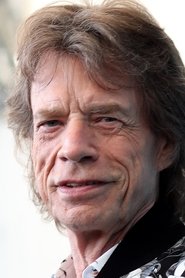
Unfortunately, this is about the only thing the filmmakers get right. The movie’s downfall begins with the introduction of wealthy art collector Joseph Cassidy (Mick Jagger fidgeting like he’d rather be anywhere else), who sits on the board of "The Debney Trust;" in that capacity, he is "to offer the great man accommodations" — the great man being reclusive painter Jerome Debney (Donald Sutherland).
Debney lives in "dilapidated little house ... at the edge of [Cassidy’s] property," but cares little or nothing for his host, routinely rejecting Cassidy’s daily invitation to join him for lunch. Cassidy recruits James to "procure" him a Debney painting in exchange for an exclusive interview with "the great man"; the way Cassidy pitches this to James is half bribe, half blackmail, and full nonsense.
Clearly, Cassidy has never heard of the whole 'if the mountain won't come to Muhammad, then Muhammad must go to the mountain' thing; what exactly it is that impedes him from going himself to the dilapidated little house and dealing directly with Debney shall remain an unfathomable mystery, equal to the riddle of why doesn’t the rich man doesn’t even attempt to bribe, not James but Debney, with something other than lunch. It shouldn’t be too hard to ply the geezer with money or some other substantial offering (Debney does confess to a weakness for a "local widow"); this is the same man, after all, who has a "charitable trust" named after him. Moreover, it will become apparent that what Cassidy wants is an art thief, rather than an art critic (insofar as James can be said to be one).
In Cassidy’s defense, though, Debney turns out to be crazier than a s--thouse rat, and as James is bound to discover, there is a powerful reason that Cassidy can’t get his hands on Debney’s work — and by 'powerful,' I mean 'really, really stupid;' I won’t reveal it, but suffice it to say that it’s even dumber than the Norwegian finger painter stuff.