FindKey

FindKeyは、100万件を超える映画・ドラマ作品、そして数百万人の人物データと独自の16類型CTI診断を統合した、日本初の感情特化型映画レコメンドエンジンです。

Find (見つける) + Key (鍵・正解)

映画に限らず、人生のヒントを見つける場所です。

FindKeyについてロケ地 (試験中)利用規約プライバシーポリシーお問い合わせ
© 2026 Bennu Inc.TMDB Logo

本サービスはTMDB APIを利用していますが、TMDBによる推奨・認定を受けたものではありません。

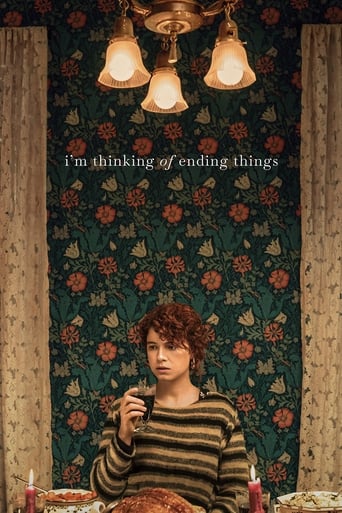
もう終わりにしよう。
もう終わりにしよう。

もう終わりにしよう。

20202h 14m★ 6.6謎スリラードラマ

あらすじ

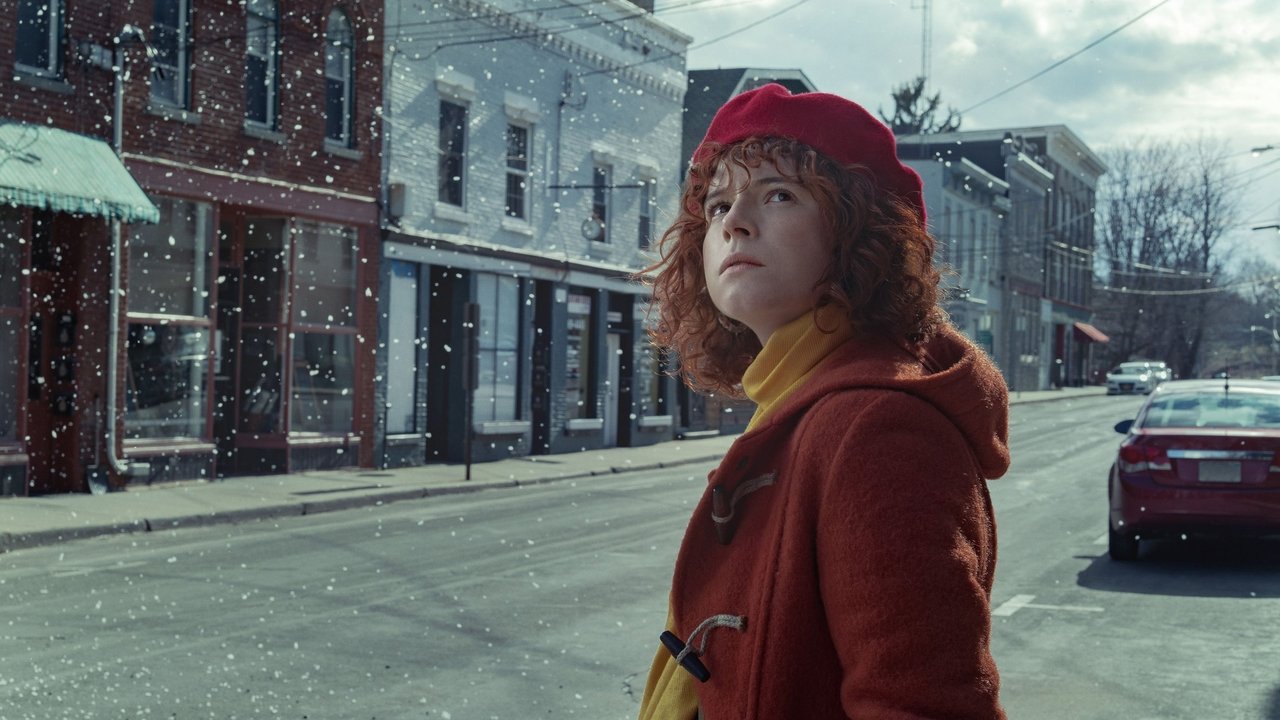
恋人との将来に悩みつつ、雪の日に辺ぴな農場に住む彼の両親を訪れた女性。だが、不思議な感覚に見舞われて、何が現実なのかわからなくなっていく。

作品考察・見どころ

チャーリー・カウフマンが描く本作の真髄は、観る者の足元を掬い続ける非線形な演出と、逃げ場のない狭い画角に閉じ込められた圧倒的な緊迫感にあります。ジェシー・プレモンスとジェシー・バックリーが体現する、噛み合わない対話の違和感は、次第に自己と他者の境界を溶かし、観る者を逃れられない心理的深淵へと誘います。 これは単なる不条理劇ではなく、後悔と空想が織りなす生の哀歌です。トニ・コレットらの怪演が彩る時間軸の歪みは、理想と残酷な現実の乖離を鋭く突きつけます。映像でしか成し得ない感覚の攪乱を通じて、人間の本質的な寂寥感をここまで美しく、そして痛ましく描き出した表現力は、観る者の記憶に深く爪痕を残すはずです。

口コミ

あなたの評価を記録する

Netflix
Netflix Standard with Ads

予告・トレイラー

配信サービス

サブスクリプション

Netflix
Netflix Standard with Ads

キャスト

ジェシー・プレモンス
ジェシー・プレモンス
Jake
ジェシー・バックリー
ジェシー・バックリー
Young Woman
トニ・コレット
トニ・コレット
Mother
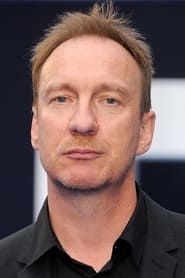
デヴィッド・シューリス
デヴィッド・シューリス
Father
Guy Boyd
Guy Boyd
Janitor
Hadley Robinson
Hadley Robinson
Laurey / Tulsey Town Girl 1
Gus Birney
Gus Birney
Aunt Eller / Tulsey Town Girl 2
Abby Quinn
Abby Quinn
Tulsey Town Girl 3
Colby Minifie
Colby Minifie
Yvonne
Anthony Grasso
Anthony Grasso
Diner Manager

スタッフ・制作会社

監督: Charlie Kaufman

脚本: Charlie Kaufman / Iain Reid

音楽: Jay Wadley

制作: ピーター・クロン / Stefanie Azpiazu / Matt Levin

撮影監督: ウカシュ・ジャル

制作会社: Likely Story / Projective Testing Service

TMDB ユーザーのレビュー

Manuel São Bento
Manuel São Bento
★ 7

If you enjoy reading my Spoiler-Free reviews, please follow my blog @ https//www.msbreviews.com Charlie Kaufman is undeniably one of the greatest writers of the 2000s. Being John Malkovich and Eternal Sunshine of the Spotless Mind are some of his most notable works, but it’s Synecdoche, New York that’s considered by many as one of the best films of the respective decade. Therefore, I was obviously excited about his return to live-action movies (since 2008, he’s only made the animated feature, Anomalisa). I’m Thinking of Ending Things boasts an incredibly talented cast, capable of seating me down and make me watch any film they participate in, even though Jessie Buckley (Dolittle) is sort of a new face to me. My expectations were moderately high, so how did it go? I’m not going to lie, I found this movie so intricate that I had a really hard time figuring it all out. As soon as it ended, I knew I didn’t understand it in full, which generated an unusual yet refreshing feeling inside me. I felt the need to not only think about the film all night but since I didn’t have the time to watch it again, I returned to a few specific scenes in the next morning. I also researched a bit and talked with a fellow critic to settle some of my mind’s internal debates. I write this to imply that this is not an easy movie to decipher, which will definitely throw some people off. It’s a film that requires all of the viewer’s attention and self-questioning capability. Otherwise, things will get complicated. As usual, I’m not sharing any spoilers, so I’ll keep my opinion about the story’s multiple interpretations to the bare minimum. Of all the numerous ways of explaining this movie, I found two: either from Jessie Buckley’s character’s perspective or from Jesse Plemons’. I like both for different reasons. In terms of logic, which every viewer will struggle to find, Plemons’ character is the key to understand the remarkably complex, multi-layered narrative. Looking at the film from his perspective, everything makes much more sense. However, it’s surprisingly from Buckley’s view that I find the movie’s message to be more interesting and likely to resonate with most people. Making an impactful move in life requires determination, courage, decisiveness. Moving to another country, switching jobs, ending a relationship… all can be extremely demanding and psychologically painful. I’m Thinking of Ending Things brilliantly demonstrates how one can delay these actions sometimes indefinitely. From the excruciatingly long car drives (almost an hour of the runtime is spent inside the car listening to the main characters debating apparently random philosophical themes) to the enigmatic transitions of time passing by, Kaufman’s screenplay keeps transmitting a message of how people are stationary and time just keeps flowing. This film takes ambiguousness and metaphoric filmmaking to a whole other level. Not only everything the viewer is seeing has, in some shape or form, a philosophical meaning, but the dialogues between the main characters are themselves about cultural, intellectual, sophisticated matters. Some of these conversations have an eventual impact in the narrative or in the characters, some just feel like Kaufman needed to express his thoughts on several subjects. With a runtime of slightly over two hours, this movie overstays its welcome a bit due to the insistence in delivering repetitive, similar scenes with the same goal. The time shenanigans performed in the parents’ house is undoubtedly intriguing, but it’s more distracting than helpful story-wise. Having in mind the already puzzling narrative, the confusion associated with understanding how time works only creates even more doubts. It also deviates the viewer’s attention from the real focus, which didn’t help my first viewing. In fact, I was so concentrated trying to comprehend the purpose behind the old-young versions of the characters that I completely lost track of the runtime, ultimately thinking the film was near its ending when it still had forty minutes to go… There’s a limit to how abstract and implicit a movie can be without becoming genuinely hard to understand, and Kaufman walks that threshold. Successful sometimes, not that much in other moments. Nevertheless, I can only share compliments from now on. Firstly, the cast. I’ve been in love with anything Toni Collette does since Hereditary, and once again, she’s weirdly captivating as an amusing yet disturbing mother. David Thewlis offers a subtler performance, as well as Jesse Plemons, even though the latter explodes with emotion in the third act. However, Jessie Buckley steals the spotlight in impeccable fashion. Like I mentioned in the beginning, I know very little of her as an actress, but I’ll make sure to add her to the list of “actresses to follow closely”. With one of the biggest emotional ranges seen this year, she delivers an incredibly captivating display, one that should guarantee her name in future contender’s list for the awards season. From citing entire poems to fiercely debating any topic thrown at her by Plemons, her commitment to the role is palpable. An astonishing performance that I will remember for a long time. However, it’s in the technical realm that this film achieves perfection. Without the shadow of a doubt, this is the best movie of the year when it comes to the technical attributes (until the date of this review, obviously). Almost every filmmaking element carries a tremendous impact in either the narrative or its characters. The purposefully rough editing (Robert Frazen) adds to the perplexing atmosphere. The lighting plus the production (Molly Hughes) and set design (Mattie Siegal) help identify “where” a particular event is happening. The detailed costume design (Melissa Toth) and the impressive makeup are vital to the understanding of everything that occurs in the parents’ house. The distinct cinematography (Łukasz Żal) elevates every single action performed by the characters. It’s a technically flawless film, and I wouldn’t be surprised to see it being nominated for several categories when the time comes. I’m Thinking of Ending Things might be a Netflix original movie, but it screams A24 all the way. From the incredibly perplexing narrative told through bizarre storytelling to its distinctly unconventional technical characteristics, Charlie Kaufman offers a remarkably complex film that can take different interpretations (and may require more than one viewing). His insistence in transmitting one of the film’s messages through never-ending philosophical conversations and confusing time-bending distractions stretch the story to an unnecessary long runtime that hurts the overall piece. Nevertheless, all messages are successfully delivered through an intriguing, head-scratching, weirdly captivating story packed with cultural debates and unique characters. An absolutely outstanding Jessie Buckley elevates every single line of dialogue, showing tremendous emotional range, but the impressively talented cast also improves the multi-layered screenplay. Technically, it is and it will remain as one of the best movies of the year. Every technical aspect is close to perfection, and almost all have a massive impact on the story and how the viewer interprets it. It will undoubtedly create a gap between critics and audiences since it has all the ingredients that usually place these groups at opposite extremes. I can only recommend it to people who are able to dedicate their full attention to what they’re watching while being capable of self-questioning. It’s not your usual Netflix flick to pop during tedious home tasks to help pass the time, so make sure you know what you're getting into! Rating: B

Manuel São Bento
Manuel São Bento
★ 7

If you enjoy reading my Spoiler-Free reviews, please follow my blog @ https//www.msbreviews.com Charlie Kaufman is undeniably one of the greatest writers of the 2000s. Being John Malkovich and Eternal Sunshine of the Spotless Mind are some of his most notable works, but it’s Synecdoche, New York that’s considered by many as one of the best films of the respective decade. Therefore, I was obviously excited about his return to live-action movies (since 2008, he’s only made the animated feature, Anomalisa). I’m Thinking of Ending Things boasts an incredibly talented cast, capable of seating me down and make me watch any film they participate in, even though Jessie Buckley (Dolittle) is sort of a new face to me. My expectations were moderately high, so how did it go? I’m not going to lie, I found this movie so intricate that I had a really hard time figuring it all out. As soon as it ended, I knew I didn’t understand it in full, which generated an unusual yet refreshing feeling inside me. I felt the need to not only think about the film all night but since I didn’t have the time to watch it again, I returned to a few specific scenes in the next morning. I also researched a bit and talked with a fellow critic to settle some of my mind’s internal debates. I write this to imply that this is not an easy movie to decipher, which will definitely throw some people off. It’s a film that requires all of the viewer’s attention and self-questioning capability. Otherwise, things will get complicated. As usual, I’m not sharing any spoilers, so I’ll keep my opinion about the story’s multiple interpretations to the bare minimum. Of all the numerous ways of explaining this movie, I found two: either from Jessie Buckley’s character’s perspective or from Jesse Plemons’. I like both for different reasons. In terms of logic, which every viewer will struggle to find, Plemons’ character is the key to understand the remarkably complex, multi-layered narrative. Looking at the film from his perspective, everything makes much more sense. However, it’s surprisingly from Buckley’s view that I find the movie’s message to be more interesting and likely to resonate with most people. Making an impactful move in life requires determination, courage, decisiveness. Moving to another country, switching jobs, ending a relationship… all can be extremely demanding and psychologically painful. I’m Thinking of Ending Things brilliantly demonstrates how one can delay these actions sometimes indefinitely. From the excruciatingly long car drives (almost an hour of the runtime is spent inside the car listening to the main characters debating apparently random philosophical themes) to the enigmatic transitions of time passing by, Kaufman’s screenplay keeps transmitting a message of how people are stationary and time just keeps flowing. This film takes ambiguousness and metaphoric filmmaking to a whole other level. Not only everything the viewer is seeing has, in some shape or form, a philosophical meaning, but the dialogues between the main characters are themselves about cultural, intellectual, sophisticated matters. Some of these conversations have an eventual impact in the narrative or in the characters, some just feel like Kaufman needed to express his thoughts on several subjects. With a runtime of slightly over two hours, this movie overstays its welcome a bit due to the insistence in delivering repetitive, similar scenes with the same goal. The time shenanigans performed in the parents’ house is undoubtedly intriguing, but it’s more distracting than helpful story-wise. Having in mind the already puzzling narrative, the confusion associated with understanding how time works only creates even more doubts. It also deviates the viewer’s attention from the real focus, which didn’t help my first viewing. In fact, I was so concentrated trying to comprehend the purpose behind the old-young versions of the characters that I completely lost track of the runtime, ultimately thinking the film was near its ending when it still had forty minutes to go… There’s a limit to how abstract and implicit a movie can be without becoming genuinely hard to understand, and Kaufman walks that threshold. Successful sometimes, not that much in other moments. Nevertheless, I can only share compliments from now on. Firstly, the cast. I’ve been in love with anything Toni Collette does since Hereditary, and once again, she’s weirdly captivating as an amusing yet disturbing mother. David Thewlis offers a subtler performance, as well as Jesse Plemons, even though the latter explodes with emotion in the third act. However, Jessie Buckley steals the spotlight in impeccable fashion. Like I mentioned in the beginning, I know very little of her as an actress, but I’ll make sure to add her to the list of “actresses to follow closely”. With one of the biggest emotional ranges seen this year, she delivers an incredibly captivating display, one that should guarantee her name in future contender’s list for the awards season. From citing entire poems to fiercely debating any topic thrown at her by Plemons, her commitment to the role is palpable. An astonishing performance that I will remember for a long time. However, it’s in the technical realm that this film achieves perfection. Without the shadow of a doubt, this is the best movie of the year when it comes to the technical attributes (until the date of this review, obviously). Almost every filmmaking element carries a tremendous impact in either the narrative or its characters. The purposefully rough editing (Robert Frazen) adds to the perplexing atmosphere. The lighting plus the production (Molly Hughes) and set design (Mattie Siegal) help identify “where” a particular event is happening. The detailed costume design (Melissa Toth) and the impressive makeup are vital to the understanding of everything that occurs in the parents’ house. The distinct cinematography (Łukasz Żal) elevates every single action performed by the characters. It’s a technically flawless film, and I wouldn’t be surprised to see it being nominated for several categories when the time comes. I’m Thinking of Ending Things might be a Netflix original movie, but it screams A24 all the way. From the incredibly perplexing narrative told through bizarre storytelling to its distinctly unconventional technical characteristics, Charlie Kaufman offers a remarkably complex film that can take different interpretations (and may require more than one viewing). His insistence in transmitting one of the film’s messages through never-ending philosophical conversations and confusing time-bending distractions stretch the story to an unnecessary long runtime that hurts the overall piece. Nevertheless, all messages are successfully delivered through an intriguing, head-scratching, weirdly captivating story packed with cultural debates and unique characters. An absolutely outstanding Jessie Buckley elevates every single line of dialogue, showing tremendous emotional range, but the impressively talented cast also improves the multi-layered screenplay. Technically, it is and it will remain as one of the best movies of the year. Every technical aspect is close to perfection, and almost all have a massive impact on the story and how the viewer interprets it. It will undoubtedly create a gap between critics and audiences since it has all the ingredients that usually place these groups at opposite extremes. I can only recommend it to people who are able to dedicate their full attention to what they’re watching while being capable of self-questioning. It’s not your usual Netflix flick to pop during tedious home tasks to help pass the time, so make sure you know what you're getting into! Rating: B

r96sk
r96sk
★ 7

I'll be honest, I didn't fully have a clue what was happening for large portions. Yet, I still weirdly enjoyed watching <em>'I’m Thinking of Ending Things'</em>. I think the main reasons for that are the two leads: Jessie Buckley and Jesse Plemons. They kept everything feeling fresh and intriguing to me, both have their moments in this. Toni Collette and David Thewlis also do very well. I like the cast, for sure. As for the plot, it didn't do anything for me but it did keep me thinking which I appreciated. I, personally, would've preferred a shorter run time and clearer meaning - the latter is just me though, I'm sure others will adore the way the film is portrayed. Some other reviewers have put it perfectly in terms of matching me: not nous enough to 'get it', but it still comes across as a good film. I'm fine with that, each to their own as always.


おすすめの作品