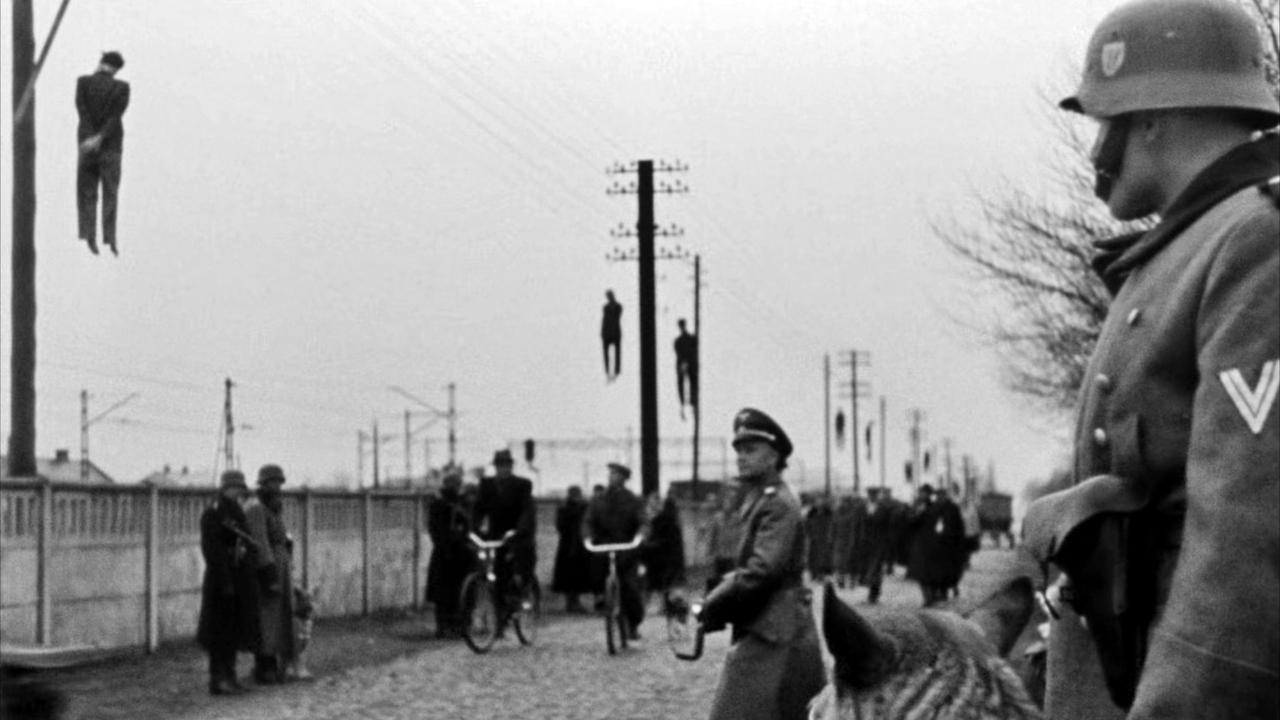
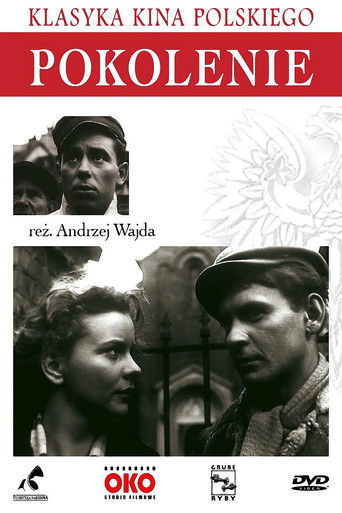
At the height of the Nazi occupation of Poland in 1942, this tells us a story of war with a slightly different slant. It takes up the cudgels of the youth whose innocence was well and truly stripped away by their oppressors and illustrates just how tough it was to grow up in any sort of a natural fashion when guns were everywhere and freedom-fighting the order of the day. That is exemplified here by "Stach" (Tadeusz Lomnicki). He grew up in the Warsaw equivalent of a shanty town, with his mother, and learned to live on a combination of wits and strength. He falls in with some communist resistance fighters at work and that's where he meets "Dorota" (Urszula Modrzynska) whom he begins a relationship with whilst perils mount outside. The killing of an officer by his close friend "Jacek" (Ryszard Kostas) makes matters much more intense and with their enemy now firmly focussed on the group, it becomes even more dangerous and lonely for an increasingly angry and frustrated 'Stach". Andrzej Wajda manages to use the tightly knit cast here to create a drama that's entirely plausible of a society struggling to retain any semblance of it's freedoms and principles in the face of an overwhelming and hostile government. He uses the character of "Stach" cleverly to contrast his vulnerability and, at times even childishness, with his courage and his desires. This also shows us a bit of the enemy of any enemy is my friend philopsohy as people with little in common find themselves (temporarily) allied to combat a common foe safe in the knowledge that each are the other's next foe down the line in due course. Like most of the best films to depict events of WWII, this uses the ordinariness of the people to fight it's corner well. Decent people who were not trained killers, indeed here they are barely out of school, yet they adapt to the wreckage of their city; reduced to huddling in corners or ruins or sewers that are darkly lit and photographed as if these very sets were terrified. This is a tough watch and it tests humanity in many of it's guises as it depicts a sort of hope from hopelessness - but without any danger of rose covered cottages, or cherry pie endings.