Backdrop
8 1/2

8 1/2

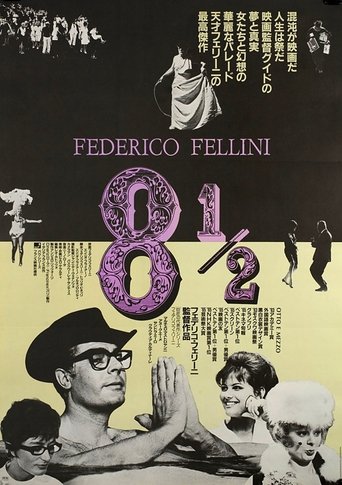
"混沌が映画だ 人生は祭だ 映画監督グイドの夢と真実 女たちと幻想の華麗なパレード 天才フェリーニの最高傑作"

19632h 19m8.1ドラマ

Trailer

Overview

言わずと知れたF・フェリーニ監督の代表的作品。映画監督のグイドはある日、自分の体が空中を落下する夢を見る。現実生活の日常に纏わる様々な精神的・肉体的な疲れを癒す為、彼は療養と称して温泉に出掛けるが、そこでも仕事や生活から逃れることが出来ない。そして彼はついに、自分が温泉で余生を過ごしている老人達の中にいるという幻覚を見はじめるが……。本作は、フェリーニ監督自身の自伝的な作品であり、その描き方も、現実と幻想を並行して描くなど秀逸! 絶対に見るべし!!

配信サービス

サブスクリプション

HuluU-NEXTAmazon Prime VideoCinefil Wow Plus Amazon ChannelAmazon Prime Video with Ads

レンタル・購入

Amazon Video

Cast

Reviews / 口コミ

あなたの評価を記録する

口コミを読み込み中...

TMDB ユーザーの口コミ

j_haseltine
j_haseltine

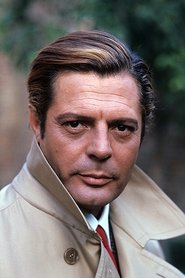
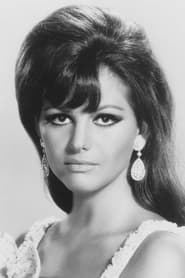
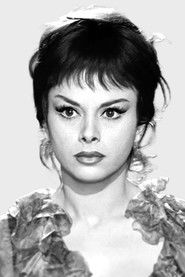
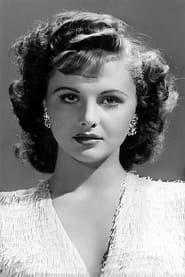
Widely touted as one of the all-time great works of cinema, Federico Fellini’s 8½ is an elusive film about even more elusive things. It’s a meaningfully chaotic picture about trying to distil meaning from chaos and it’s a creative success about creative failure. It chronicles the resonant moments in one man’s life and admits that it can’t quite clarify why they matter. Doing justice to its early working title of The Beautiful Confusion, 8½ is a daring high wire act and an outstanding technical achievement that channels its story of artistic crisis into something sweepingly, uniquely profound. Working again under Fellini’s direction after his winning performance in La Dolce Vita, Marcello Mastroianni plays Guido, a creatively blocked director feeling constantly distracted from the development of his latest semi-autobiographical work. Between avoiding his mistress (Sandra Milo) and disappointing his wife (Anouk Aimée), Guido spends time reflecting on his past, searching for answers and escaping into fantasies. The narrative seamlessly weaves in and out of Guido’s dreams and memories, to the point that it becomes impossible to distinguish real from imagined. The actress named Claudia, tellingly played by the legendary Claudia Cardinale, seems especially intangible, generally appearing only fleetingly in Guido’s visions playing the woman in his film that Guido intends to be a symbol of purity, innocence and redemption. The story, in a sense, is a mess but a brilliantly orchestrated mess that skilfully highlights the mysteries and confusions of life and the human psyche. Characters suddenly enter the narrative then leave before you’ve even noticed they’re gone because the film is confined within the periphery of Guido’s life. What these supporting players actually do isn’t as important as the impressions that they make. They’re all just additions to the fabric of the filmmaker’s mind. This perception of the world is completely in tune with the engrossingly complex lead’s own self-involved view, seeing everyone he crosses paths with as a supporting player in his existence, rather than a fully-rounded individual with a long, complicated life of their own. Guido lacks awareness of the emotional impact of his actions and underestimates his own transparency, not realising when people detect his deceptions and cowardly evasions. His wife, Luisa, in particular seems more observant of Guido’s fraudulent nature than even Guido. It’s made abundantly clear from the film’s choice of protagonist and its title (8½ being Fellini’s count of the number of films he’d made so far) that this film was meant to be viewed at least in part as a very personal work from the director. But if the weary half-heartedness of Guido’s filmmaking is meant to reflect Fellini’s own exhaustion, it’s evident that the director had got his groove back by the time shooting began. Every shot seems perfectly placed and every cut is perfectly timed for the film to fold out with effortless cohesion, like one extended monologue. Fellini hardly wastes a square inch of a single frame, saturating (but not over-saturating) his backgrounds with rhythmic movement and entrancing production design. His thoughtfully precise camera creates inexhaustible space, extending rooms by their mirrors and constructing distinct layers to the crowded environments he observes. This may well be the best directed film of Fellini’s celebrated career. 8½ remains one of those rare feats of cinema that have proved highly influential (acclaimed descendants from recent years include Charlie Kaufman’s Synecdoche, New York and Paolo Sorrentino’s The Great Beauty) and yet still wholly unique. Even Fellini himself never made another work that so gracefully blended irony with sincerity, surreality with relatability and ambiguity with insightfulness, but once was enough. This richly intricate film is built to be endlessly re-seen, enjoyed and puzzled over. The final paradox of 8½ is that it refutes itself. Apparently when a great director doesn’t know what kind of film he wants to make, he makes a masterpiece. Written by David Pountain Watch '8½' at <strong><a href="https://www.filmdoo.com/films/8-1-2-/">FilmDoo.com</a><strong> now (UK & Ireland Only)

Filipe Manuel Neto
Filipe Manuel Neto
3

**Fellini, deconstructed, improvised and enshrined in a film that (not) pleases everyone.** I'm not a fan or deep connoisseur of Italian cinema, but I've heard of Federico Fellini, and I know that this film is considered one of this director's best films. I haven't seen any of his films yet: this was the first. And honestly, I don't quite understand this fascination: the film is chaotic! I think that, unless someone is an expert in cinema, the vast majority of people who saw the film did not understand it, but then said that it was very good just to avoid being criticized. I'm glad I don't give a damn what other people think of me... Fellini was out of great ideas, and the production started working without even having an idea of what the director was going to do. Not even he knew! He was about to give up when the light came: to make a somewhat autobiographical film about a filmmaker in crisis, who had to make a film due to studio commitments, but didn't know what film he wanted to make. Let's face it: it was an excellent idea, even if it resulted in a film that is too complicated and disjointed. Over the course of more than two hours, we see scenes and situations in which the director reflected a lot about himself in the main character: the complicated issues with a restrictive and judgmental Catholic faith, strong moral conflicts, a rebellious childhood, the omnipresence of impactful female figures (the mother, the wife, the objects of desire)… everything is composed as a delirium of a filmmaker empty of ideas. For the time, this was quite innovative, but looking closely today, it doesn't make much sense and is more tiring than interesting. Technically, the film is excellent. The soundtrack, by Nino Rota, is quite atmospheric; the cinematography, with the framing, the differences in shot and sharpness, is an authentic lesson taught by a master. The choice of filming locations and sets is careful. Marcello Mastroianni and Claudia Cardinale are the most notable actors in the film, but they both have better works and I don't feel that this film is worth seeing because of them. But what really tired me was the artificiality of the dubbed dialogues: Fellini liked to film with noise (he's like that college students who like to study in crowded cafeterias), and the actors often improvised their lines over a sketch that was given at this moment, so all the dialogues were dubbed and arranged in post-production. The result is surreally strange and fake, with the movement of the mouth not matching what we are hearing. Yes, this is one of the great works of Italian cinema, that's for sure, and when we see these points analyzed we can understand it better. But it is not the type of film that the general public wants to see, and it ended up being left to an intellectualist and hermetic elite, who like to treat cinema as their thing, with an almost mystical sort of knowledge that cannot be passed on to any mortal. I don't care about that, or what anyone calls me: films like that are good for sleeping.
CinemaSerf
CinemaSerf
7

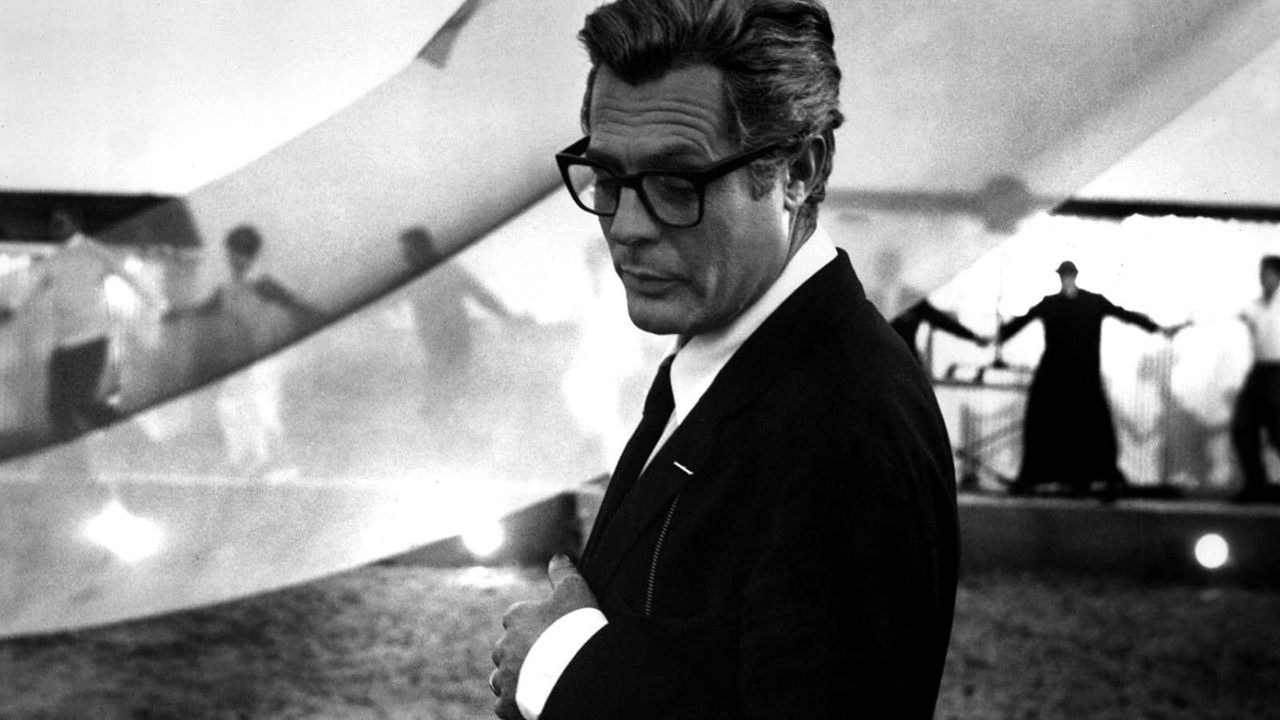
Acclaimed director "Guido" (Marcello Mastroianni) is looking for a peaceable life after his last successful movie, but at every turn he is being pursued by people who want to capitalise on the success. He just hasn't the inspiration though - and determined not to just churn out any old rubbish, retreats to a small town for some rest, recuperation and hopefully inspiration. He in also rather reaping what he sowed as his wife "Luisa" (Anouk Aimée) and her rival "Claudia" (Claudia Cardinale) are vying for his increasingly frayed attentions and that makes any chance of concentration almost impossible. What happens now? Actually that's not so important to the thrust of the plot. What's a little more engaging here is a sort of hybrid illustrating the foibles of those creatives desperate for and addicted to the whole process of making a film as well as all of them demonstrating just how difficult it can be to actually produce a feature film. The narrative is also quite confusing at times with chronologies blurring and timelines being adapted as if on a whim - and those whims aren't always immediately clear to us who watch on bemusedly. There's something natural about the characterisations too. The venal, the aspirational, the lovelorn, the lovestruck - and the director who is genuinely swimming through a series of doldrums from which he cannot readily escape. The intensity never really lets up - indeed every time you see Guido Alberti - his long-suffering producer "Pace" you almost want to weep for a "Guido" under the sort of relentless pressure usually reserved for the father of a family of two hundred dependents. Mastroianni juggles the balls required for this part skilfully and by the mid point of this 2¼ cinema curiosity I felt a degree of his physical and emotional exhaustion visited on me, too! Nino Rota could always be relied upon provide a solid score - and here he reflects the mood of the story and it's personalities with an eclectic series of themes that range from the adagio to an entertaining Italian version of a grand scale hokey cokey. There's maybe just a little too much dialogue for me here. It's all pretty break-neck paced anyway, and occasionally I did just want them all to shut up - but this is still a potpourri of ideas and personae that offers an amusing look at film making and film makers alike.

おすすめの作品

甘い生活
2h 56m
8.0

甘い生活

監督Federico Fellini
出演マルチェロ・マストロヤンニ, Anita Ekberg, アヌーク・エーメ
1960映画
フェリーニのアマルコルド
2h 3m
7.9

フェリーニのアマルコルド

監督Federico Fellini
出演プペラ・マッジオ, Armando Brancia, Magali Noël
1973映画
道
1h 55m
7.9

監督Federico Fellini
出演ジュリエッタ・マシーナ, Anthony Quinn, Richard Basehart
1954映画
イタリア式離婚狂想曲
1h 44m
7.9

イタリア式離婚狂想曲

監督Pietro Germi
出演マルチェロ・マストロヤンニ, Daniela Rocca, Stefania Sandrelli
1961映画
Marriage Italian Style
1h 42m
7.7

Marriage Italian Style

監督Vittorio De Sica
出演Sophia Loren, マルチェロ・マストロヤンニ, Aldo Puglisi
1964映画
息子の部屋
1h 39m
7.1

息子の部屋

監督Nanni Moretti
出演Nanni Moretti, Laura Morante, Jasmine Trinca
2001映画
フェリーニのローマ
2h 0m
7.2

フェリーニのローマ

監督Federico Fellini
出演Peter Gonzales Falcon, Fiona Florence, Pia De Doses
1972映画
白い酋長
1h 23m
7.2

白い酋長

監督Federico Fellini
出演Alberto Sordi, Brunella Bovo, Leopoldo Trieste
1952映画
殺人捜査
1h 51m
8.2

殺人捜査

監督Elio Petri
出演Gian Maria Volonté, フロリンダ・ボルカン, Gianni Santuccio
1970映画
無防備都市
1h 43m
8.0

無防備都市

監督ロベルト・ロッセリーニ
出演Aldo Fabrizi, Marcello Pagliero, Harry Feist
1945映画
青春群像
1h 43m
7.6

青春群像

監督Federico Fellini
出演Franco Interlenghi, Alberto Sordi, Franco Fabrizi
1953映画
大人は判ってくれない
1h 37m
8.0

大人は判ってくれない

監督François Truffaut
出演Jean-Pierre Léaud, Claire Maurier, Albert Rémy
1959映画