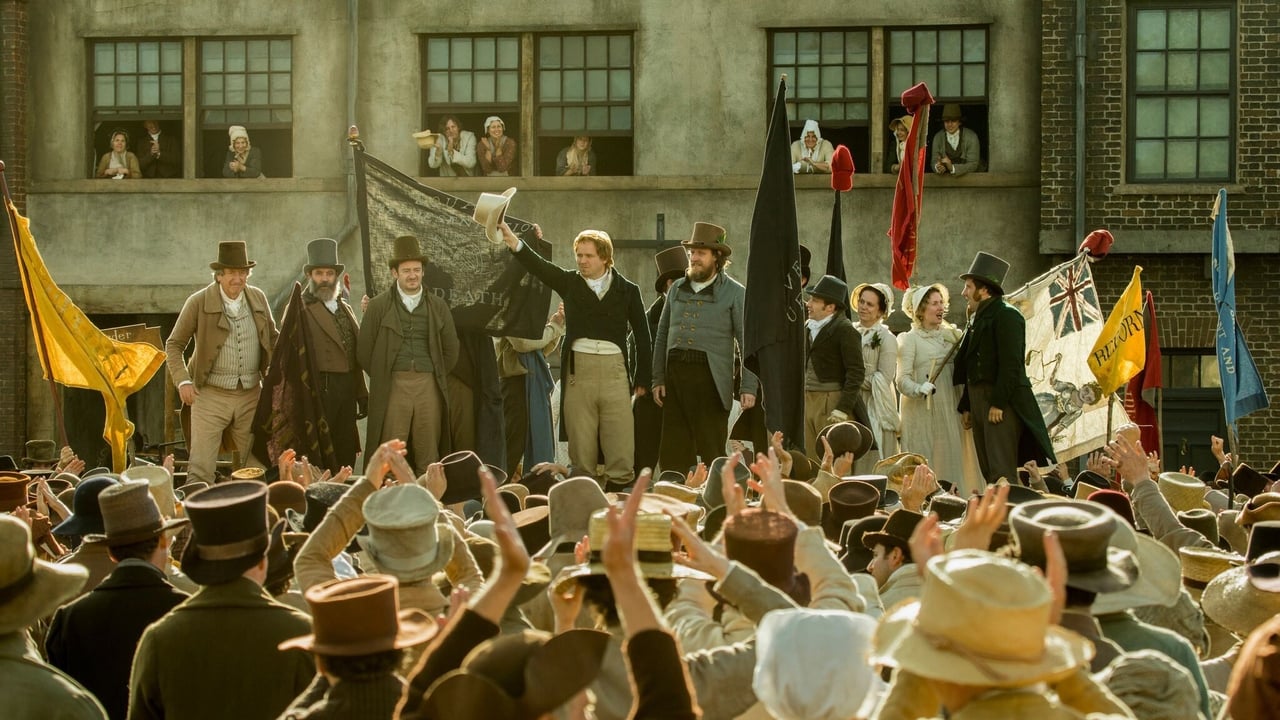
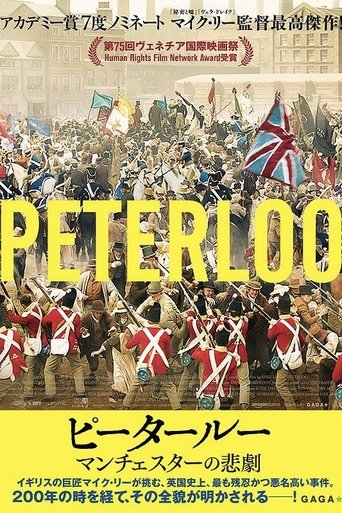
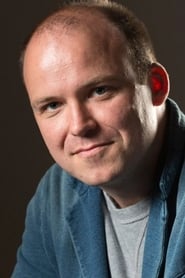
It's quite interesting to consider that even in the mother of western democracies, as recently as two hundred years ago most men did not have the vote in the UK, and great swathes of urban Britain had no representation at all. Mike Leigh is perhaps a little heavy handed here, but he does offer us an at times poignant glimpse into the poverty in which the working class lived in England's north west whilst the governing class lived a life of opulence and privilege under the Prince Regent. Rory Kinnear is the renowned orator "Hunt" who travels the length and breadth of the land advocating a peaceful, positive, realignment of power. A trip to Manchester proves to be the ultimate catalyst for the increasingly panic-stricken authorities who - with events in Paris forty years early still prescient - have decided that these increasingly popular gatherings must be stamped out. Leigh has assembled a workmanlike cast here - there isn't really a star, as such - and that helps better illustrate that this is a story about the ordinary man. I say man, because we are a long way from female emancipation being on the back burner, even - indeed the stronger characters here - "Mary" (Rachel Finnegan) and "Nellie" (Maxine Peake) are entirely focussed on empowering their "men folk". What this film does not present though, is any sort of balance to the historical aspects of this conflict. It exaggerates the indifference and excesses of the landed gentry whilst offering a rather naive portrayal of some those advocating revolution. Like many films that present a political assessment of an hugely complex set of scenarios, it ends up reflecting the views of the auteur and that's a shame. This is a story of profound societal evolution that could have been more effective had the establishment been given slightly more airtime and been treated slightly less one-dimensionally and judgmentally. The dialogue is at times, though, really quite powerfully potent and this is a very authentic-looking story that history ought not to readily forge and that is well worth a watch.