
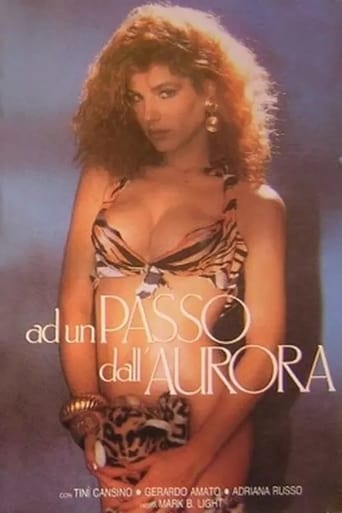
Ad un passo dall'aurora
あらすじ
No synopsis available.
スタッフ・制作会社
口コミ
あなたの評価を記録する
TMDB ユーザーのレビュー
A Nightmare in Venice is a low-budget, late-80s erotic thriller that loosely reconstructs the conceptual spine of Arthur Schnitzler’s Traumnovelle, later adapted by Kubrick into Eyes Wide Shut, but trades psychological ambiguity for explicit criminal conspiracy. Set against the Venice Carnival, the film follows Ricardo, a successful but internally dissatisfied cardiac surgeon who becomes entangled with a prostitute, an old acquaintance, and ultimately a masked organization that operates not as an uncanny social hierarchy but as a literal coercive syndicate. Where Schnitzler and Kubrick allow the ritual space to remain structurally illegible and therefore psychologically destabilizing, this film explains its mechanisms outright: passwords, tasks, punishments, and a concrete scheme to infect a political figure via contaminated blood. The result is a narrative that shifts the masked elite from a metaphysical system of power into a legible, almost procedural criminal enterprise. The film’s most revealing feature, and its central weakness, is precisely this loss of ambiguity. By making the organization’s motives explicit and its methods concrete—down to the forced injection of a virus and the use of blackmail and coercion—the story collapses the eerie, structural dread present in other adaptations into a conventional thriller logic of cause and effect. Instead of suggesting that Ricardo has glimpsed a hidden social order beyond his comprehension, the film frames his ordeal as entrapment by a secretive but ultimately comprehensible network. In doing so, A Nightmare in Venice becomes less about masks as symbols of fluid identity and more about masks as literal disguises for criminal actors, inadvertently demonstrating how the removal of uncertainty transforms an existential nightmare about power and hierarchy into a finite, morally condemnable conspiracy plot.