FindKey

FindKeyは、100万件を超える映画・ドラマ作品、そして数百万人の人物データと独自の16類型CTI診断を統合した、日本初の感情特化型映画レコメンドエンジンです。

Find (見つける) + Key (鍵・正解)

映画に限らず、人生のヒントを見つける場所です。

FindKeyについてロケ地 (試験中)利用規約プライバシーポリシーお問い合わせ
© 2026 Bennu Inc.TMDB Logo

本サービスはTMDB APIを利用していますが、TMDBによる推奨・認定を受けたものではありません。

いまを生きる
いまを生きる

いまを生きる

“その人はひらめきと、そして人生の素晴らしさをおしえてくれた…。”

19892h 8m★ 8.3ドラマ

あらすじ

1959年、バーモントにある全寮制の名門進学校にやって来た新任の英語教師。破天荒な授業を通して、詩の美しさや人生の素晴らしさを説く教師に惹かれていった生徒たちは、彼がかつて学生だった頃に作っていた“死せる詩人の会”という同好会を自分たちの手で復活させる。ドラマの背景となる、初秋から冬にかけてのニューイングランド地方の風景も美しい。

作品考察・見どころ

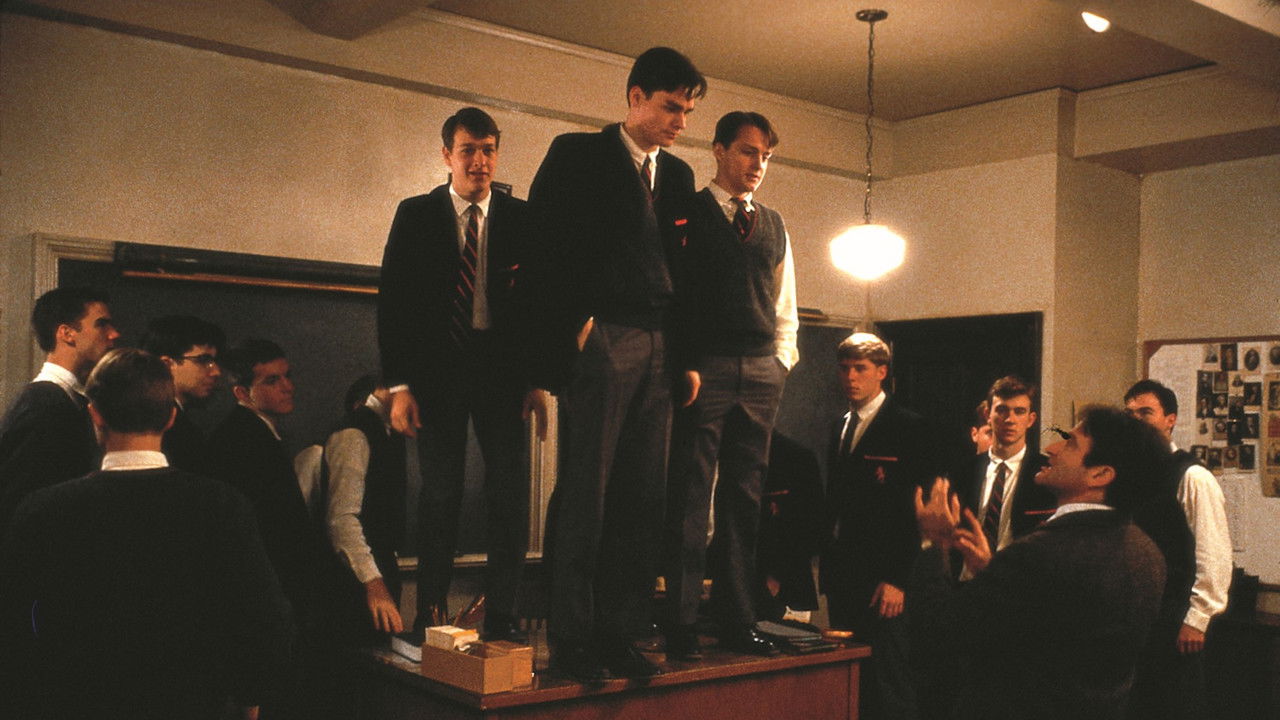
本作の真髄は、言葉という翼で個の解放を説くキーティングの情熱にあります。ロビン・ウィリアムズが魅せる静謐かつ力強い演技は、単なる教師像を超え、若者の閉塞した心に風を送り込む救世主のようです。机の上に立ち、視点を変える重要性を説く名シーンは、観客の既存の価値観をも根底から揺さぶる破壊力を秘めています。 若手俳優陣が体現する、希望と絶望が入り混じった繊細な機微も見事です。規律の中で魂の声を叫ぶ、あまりに美しく痛烈な人間賛歌は、「今を生きる」ことの尊さと残酷さを同時に突きつけます。人生という荒野で、自分だけの詩を見つける勇気を授けてくれる至高の教育映画であり、魂のバイブルです。

興行成績

製作費: $16,400,000 (25億円)

興行収入: $235,860,116 (354億円)

推定収支: $219,460,116 (329億円)

※製作費・興行収入はTMDBのデータを参照しています。収支は(興行収入 - 製作費)で算出したFindKey独自の推定値であり、広告宣伝費や諸経費は含まれません (1ドル=150円換算)。

口コミ

あなたの評価を記録する

予告・トレイラー

配信サービス

レンタル・購入

Amazon Video
Apple TV Store
Google Play Movies

特集レポート

FindKeyのエディトリアルチームがこの作品の深層や歴史を解説しています。

『いまを生きる』ほか、魂が共鳴する「友情の素晴らしさ」に震える傑作映画5選

FindKey Editorial2026/2/18

孤独な魂が響き合う瞬間。『グリーンマイル』ほか、友情の深淵に震える感動のヒューマンドラマ5選

FindKey Editorial2026/2/4

森の静寂に溶け込む、魂の処方箋 ―― 自然と共鳴する5つの映画体験

FindKey Editorial2026/2/3

キャスト

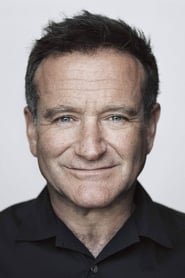
ロビン・ウィリアムズ
ロビン・ウィリアムズ
John Keating
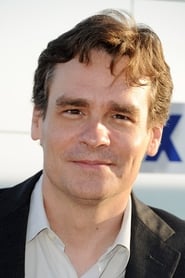
ロバート・ショーン・レナード
ロバート・ショーン・レナード
Neil Perry
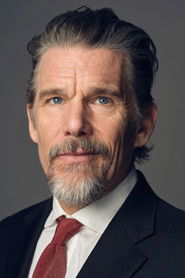
イーサン・ホーク
イーサン・ホーク
Todd Anderson
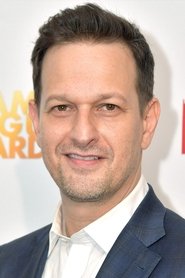
ジョシュ・チャールズ
ジョシュ・チャールズ
Knox Overstreet
ゲイル・ハンセン
ゲイル・ハンセン
Charlie Dalton
ディラン・カスマン
ディラン・カスマン
Richard Cameron
アレロン・ルッジェロ
アレロン・ルッジェロ
Steven Meeks
ジェームズ・ウォーターストン
ジェームズ・ウォーターストン
Gerard Pitts
ノーマン・ロイド
ノーマン・ロイド
Mr. Nolan
カートウッド・スミス
カートウッド・スミス
Mr. Perry

スタッフ・制作会社

監督: ピーター・ウィアー

脚本: トム・シュルマン

音楽: モーリス・ジャール

制作: Tony Thomas / Steven Haft / Paul Junger Witt

撮影監督: ジョン・シール

制作会社: A Steven Haft Production / Witt/Thomas Productions / Silver Screen Partners IV / Touchstone Pictures

TMDB ユーザーのレビュー

John Chard
John Chard
★ 9

Carpe Diem & The Punk Rock Movie. Dead Poets Society is directed by Peter Weir (Picnic At Hanging Rock/Gallipoli) and stars Robin Williams, Robert Sean Leonard, Ethan Hawke, Kurtwood Smith, Gale Hansen & Norman Lloyd. The script is written by Tom Schulman, based on his life at Montgomery Bell Academy, an all-boys preparatory school in Nashville, Tennessee. The film is set in 1959 at the fictional Welton Academy in Vermont (location shoot from St. Andrew's School in Middletown, Delaware). The story follows that of English teacher John Keating who uses his different method of teaching to inspire his students to be all that they can be whilst warning of the perils of conformity. Dead Poets Society was a monster smash hit that made almost $220 million profit in Worldwide box office takings. Not bad considering this was the year that film lovers flocked to see the likes of Batman, Lethal Weapon 2 and the third outing for one Indiana Jones. It showed that there was a mainstream market for serious drama if it is done well. And rest assured, Dead Poets Society is done well, very well in fact. Its launchpad is Schulman's Academy Award winning script that puts under the microscope educational conformity and the ogres that are parental and peer pressure. Enter the inspired casting of Robin Wiliams (nominated for BAFTA & Academy Award for Best Actor) as the teacher who urges his charges to see outside of the box that they have been placed in. Young men, soon to be full adults, who have their lives mapped out for them, are challenged by Mr Keating to be spontaneous, to pursue idealism and view life with new perspectives. Coming two years after he was nominated for Good Morning Vietnam, Williams once and for all proves to his doubters that he is a quality dramatic actor. His Keating is charismatic but without the mad-cap histrionics that Williams is famed for. Very controlled, in that what is in essence a catalyst role, Keating hasn't rushed to become said catalyst. He's a constant sympathetic presence, a father figure type, yet a confidential friend too. That Schulman's script has avoided the usual clichés that come with teacher-student relations in film's helps Williams as an actor to breath intelligent life into Keating. Even the flecks of humour that Williams is allowed to work from, such as Brando doing Shakespeare, play with a warmth that's essential to the relationships forming in the piece. Tho it's unquestionably Williams' movie (the film soars when he is on screen), the young cast playing the students get an A + for their sensitive portrayals. Notably Robert Sean Leonard (heartfelt), Ethan Hawke (haunting) & Gale Hansen (punky). While Kurtwood Smith leaves an indelible image as a domineering father. In the hands of Weir, the film, unsurprisingly to his fans, carries an air of mysticism too. Again working with one of his regular DOP's, John Seale, Weir knows how to capture the time, place and people in his movies; while cloaking them in dashes of mystical beauty. Be it the boys striding around the school grounds amidst autumnal hues, or plodding wearily thru the snowy terrain as Winter kicks in, Weir gives the scenes an apt poetic quality. It's also of note that these scenes, as well as the cave sequences where the Dead Poets Society meetings take place, blend with the characters emotional states. Sprightly and optimistic around the greenery, nervous and excited in the darkened cave, then heavy of heart and leg as the fall accompanies the emotionally turbulent last quarter. A last quarter that leads to what has now become a divisive ending. Some have (and will) come away from it irked and claiming it to be syrupy. Others such as myself find it uplifting, hopeful and a fitting end to the emotional roller-coaster that cast and crew have taken us on. Is your glass half full or half empty? An excellent and intelligent story is directed and acted accordingly, with its themes making it actually one of the best Punk Rock movies out there. 9/10
Wuchak
Wuchak
★ 10

_**Seize the day; be Exceptional!**_ John Keating (Robin Williams), a new teacher at a stuffy prep school in 1959, inspires his students to capitalize on their natural talents and develop a passion for life because they only have one shot and in 60 years or so they'll all be worm-food. Each boy starts to act on Keating's dynamic ideas with explosive consequences , both good and bad. Released in 1989 and directed by Peter Weir, "Dead Poets Society" is a coming-of-age drama that's one of the most inspiring films ever made and ranks with my all-time favorite movies. The film captivates from the very beginning and doesn't release until it's over. That's when you KNOW a movie's really good, regardless of the subject matter. The cinematography and locations are top rate, shot in the Middletown region of Delaware (although the story itself takes place in Vermont). The quiet Fall & Winter scenes are breathtaking. This is not a spoiler, but there's a powerful scene at the climax where the students give Keating a daring final salute. Roger Ebert criticized the scene as "so moving he wanted to throw up," but he's dead wrong. It is both unexpected and potent. The film contains a wealth of riches to mine in subsequent viewings, and I don't just mean the insights conjured from the poetry & prose. Here are a handful off the top of my head: "The letter kills," referring to the legalistic nature of Neil's joyless father and most of the teachers at the school; the type of Judas (Cameron); the scapegoat (Keating); the stunning nature of feminine beauty (when Chris appears at the entrance of the school and the guys' mouths drop); the marvels of nature and how they're conducive to inspiration & spirituality; Keating's heartbroken countenance after Neil is removed from the theater crowd (Keating knows there's little he can do about the authoritarian mistreatment). There are a couple of insignificant scenes that don't work so well, but that's always the case, even with the best of films. One possible objection is that one boy's tragedy goes against the very message of the film to "seize the day." I disagree. The kid really started to "seize the day" but his passions were quenched by someone who didn't share Keating's mindset and he unfortunately couldn't handle it. Again, dynamic ideas have explosive consequences, good and bad. The other kids had varying results with their attempts to "seize the day." Some made progress in attaining their dreams and others got in trouble because they threw wisdom to the wind. The varying results make the story realistic. Another criticism was voiced by a reviewer who stated that the late night meetings at the cave to read poetry and inspire one another were "homo erotic." This interpretation could only be derived by an adult in our gay-obsessed modern culture. The kids in the film are about 16-17 years-old. This was the only way they could go out and have fun under the strict rules of a New England prep school in 1959. I remember when I was a teenager going out to the treehouse with several guys and drinking & smoking; we'd sometimes discuss metal/rock lyrics, which could be viewed as a delinquent form of poetry, and other such things. Sometimes we'd bring a girl or three. Likewise, in two of the cave meetings in the film one of the guys brings a couple babes from another school whilst the others look on in awe; on two other occasions a guy brings nude pages of whoa-men. I think that pretty much quells the "homo-erotic" theory. Most of those who scoff at this film's message go back to their 9 to 5 slavery (or 3 to 11 or 11 to 7, etc.) with no light at the end of the mundane tunnel. I encourage such people to give the film a second look. But BEWARE, there are no moronic explosions, CGI, non-stop 'action,' gore, OTT cussing, nudity or sex scenes; I know that's completely shocking, but it's true. Then I would encourage these people to take a good look at their lives and ask: Are you willing to change it? Throw off the shackles? Throw caution to the wind and pursue your true calling, your dream? Will you "sieze the day"? Or will you continue to stagnate in a puddle of mediocrity? The answer that comes back will usually determine if this film becomes a favorite or not. FINAL ANALYSIS: Australian director Peter Weir has other good films like "Witness" and "Picnic at Hanging Rock" (the latter is, incidentally, a film about an ALL-GIRLS school and can be boring if you're not in the mood for an ultra-mystery yarn), but "Dead Poets Society" is his best. Check it out. Give it a second (or third) chance if you haven't already. It's an outstanding story and it'll inspire you, especially if you've fallen into a life-stifling, growth-stultifying rut of drudgery. The film runs just over two hours (128 minutes). GRADE: A+

CinemaSerf
CinemaSerf
★ 7

Robin Williams ("Keating") arrives at an all boys school where he is to teach them English. As you'd expect, they weren't particularly interested, but when he begins by telling them to rip up the poetry manual, and continues with an inspirational and vocational approach the pupils start to engage not only with him, but they set up the eponymous club which helps each of them to develop as a person. This is quite a task for the shy young "Todd" (easily the most effective performance of Ethan Hawke's career) and for aspiring actor "Neil" (a terrifically measured and sincere Robert Sean Leonard) who is struggling to reconcile his own desires with those of his loving, but over-bearing, father who wants him to go to Harvard and become a lawyer. This is a terrific character based drama with Williams on great form, but he features quite sparingly - the thrust of this potent, funny and thought-provoking narrative rests with the young men. Their ensemble effort exposes a myriad of layered teenage foibles from trauma to Tennyson; Shakespeare to sex (or sax!) - with well written and delivered dialogue that focuses poignantly and cleverly on their maturing personalities. This film is highly recommended.

crazyrobinhood
crazyrobinhood
★ 1

The (very absurd) point of view of the rich people about freedom. The Movie is so pathetically formulaic that it makes you want to throw tomatoes at the screen. The Horatian ideal, of Stoic-Epicurean origin, of a life enjoyed in the good it gives us, even if it is little, is here often repeated, inaccurately, as an invitation to live joyfully. And it makes us laugh and reflect even more that it is observed from an "even higher" point of view than the already very high social class of the characters.

kevin2019
kevin2019
★ 8

"Dead Poets Society" never endeavours to sweeten the bitter pill of disappointment or tragedy by playing to whatever cliched expectations you might have. Neil's father Mr. Perry isn't going to suddenly relent and admit what a stupid and selfish fool he has been and then decide to change his uncompromising viewpoint in relation to his son's disputed future. He actually becomes even more entrenched in his stubborn determination that his son will live his life the way he wants it lived. However, this film isn't content to end on such a desperately dispiriting note as Neil's tragic suicide, so it returns to the original stance championed by Keating throughout when some of his now former students stand on their desktops in an act of defiant solidarity and also as a final salute to their departing captain. They now have the potential to see life from a completely different angle than the rest of us because of him and that is precisely what a solid education is supposed to do. It is the precious gift of being able to think and reason and draw intelligent and well informed conclusions for yourself on any number of various subjects.

おすすめの作品