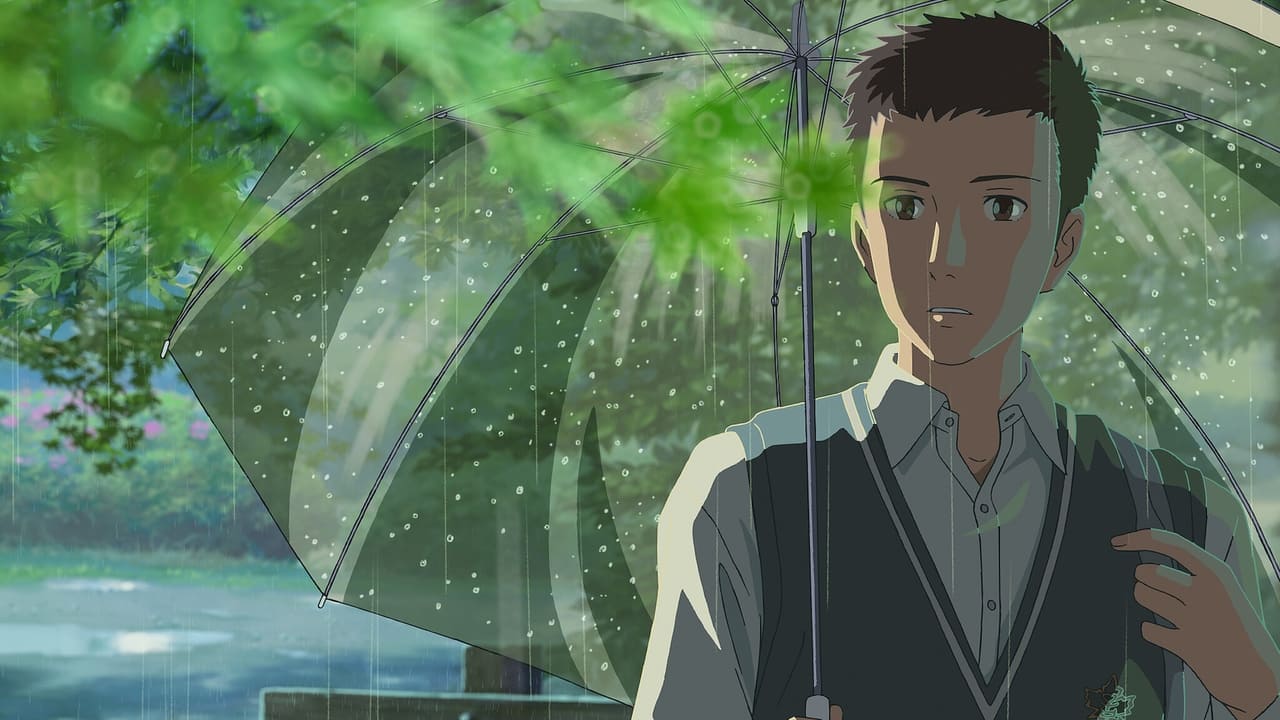
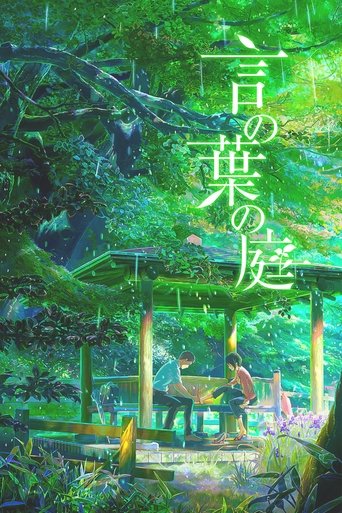
The Garden of Words poetically symbolises the tranquility and loneliness of rain. “A faint clap of thunder. Even if the rain comes not, I will stay here, together with you”. Walking the path of life is no easy feat. The appropriate metaphysical footwear must be utilised for every type of emotional terrain we encounter. Sandals for joy. Wellies for sadness. Sneakers for rage. Yearning to overcome our rational, or irrational, fears so that we can “walk” again. Teenage student Takao, an aspiring shoemaker, attempted to perform such a generous offer for Yukari. A mysterious woman he socialises with in the dense thickened foliage of a Japanese garden experiencing torrential downpour. Two souls of differing youth encompassing an identical level of maturity. Yukari avoiding her career to snack of delicious chocolate and consume canned beer, whilst Takao solidly working throughout his summer break.
The two share a common trait. Seclusion. The melancholy of isolation is one that evokes a rainfall of sympathy, and director/writer Shinkai embodies all of nature’s complexities to portray these wandering individuals. The ferocity of rain portraying both the characters’ sadness whilst shielding them from the rest of society. The pale green shading of the summery foliage producing a reassuring aura of tranquility within the garden. Yet it’s Shinkai’s usage of Man’yōshū poetry that truly captivates, adding a traditional authenticity to the Japanese central romantic narrative. With “love” being traditionally written as “lonely sadness”, Shinkai honed in on the deprivation of companionship. When both characters see each other as salvational assets as opposed to romantic interests, it provides a subtle layer of maturity that is commonly found in Shinkai’s writing. Love is never simple, yet nature finds a way to pull people together. The Garden of Words itself is that motif.
As expected, the animation was gorgeous. Faultless. Combining hand-drawn animation with rotoscoping to create meticulously constructed scenery, assisting in the world building of their blossoming friendship. Less detail is given to facial expressions, with much of the attentive focus towards the environmental backdrop, which occasionally leaves a vacuous emotional complexion. Almost expressionless on occasion. Not enough to deter from the character building, but worth noting.
Shinkai’s unfortunate issue here is with the runtime. It’s short. Absurdly short. At only forty six minutes in length, the character development between Takao and Yukari is often rushed with no emotional simmering. This became drastically noticeable during the climax when Takao discovers the reasoning behind Yukari‘s work avoidance. The exquisitely mature metaphors and symbolic imagery were somewhat diminished for a typical “anime ending”. What I mean by that, is the sole purpose in attempting to make the viewers shed a tear. The erratic framing, the J-pop music and the explosion of emotion is typical work from Shinkai, yet it never suited the preceding scenario. Whilst it nearly, oh so nearly, worked for me (I held back that tear!), it fell short due to the complacent storytelling. Motohiro Hata’s vocal talent behind the theme song “Rain” was exceptional though, almost replicating Takao’s personality. So I’ll give some leniency...
The Garden of Words is poetry. Visually and literarily. With gorgeously vibrant animation and themes of maturity, Shinkai has crafted a wonderfully organic story that depicts loneliness with a hint of empathy. If only he was able to stretch it out for another half an hour, we could’ve witnessed a masterpiece in the making.