**A forgotten film that deserves to be revisited, even with all its flaws.**
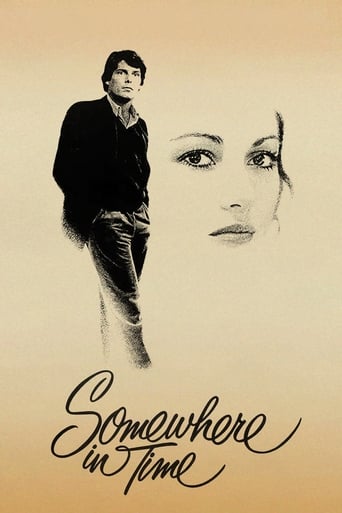
Personally, I liked this film. It's one of those films that fell into oblivion very quickly, which doesn't seem fair to me: the film is much better than many more expensive and publicized productions, even though it has serious problems, which I'll talk about. Perhaps very few, besides the producers and cast, really believed in it: it didn't receive much attention from studios and theaters, it was a huge success in Asia but was ridiculed in the USA, while Europe seems to have ignored it.
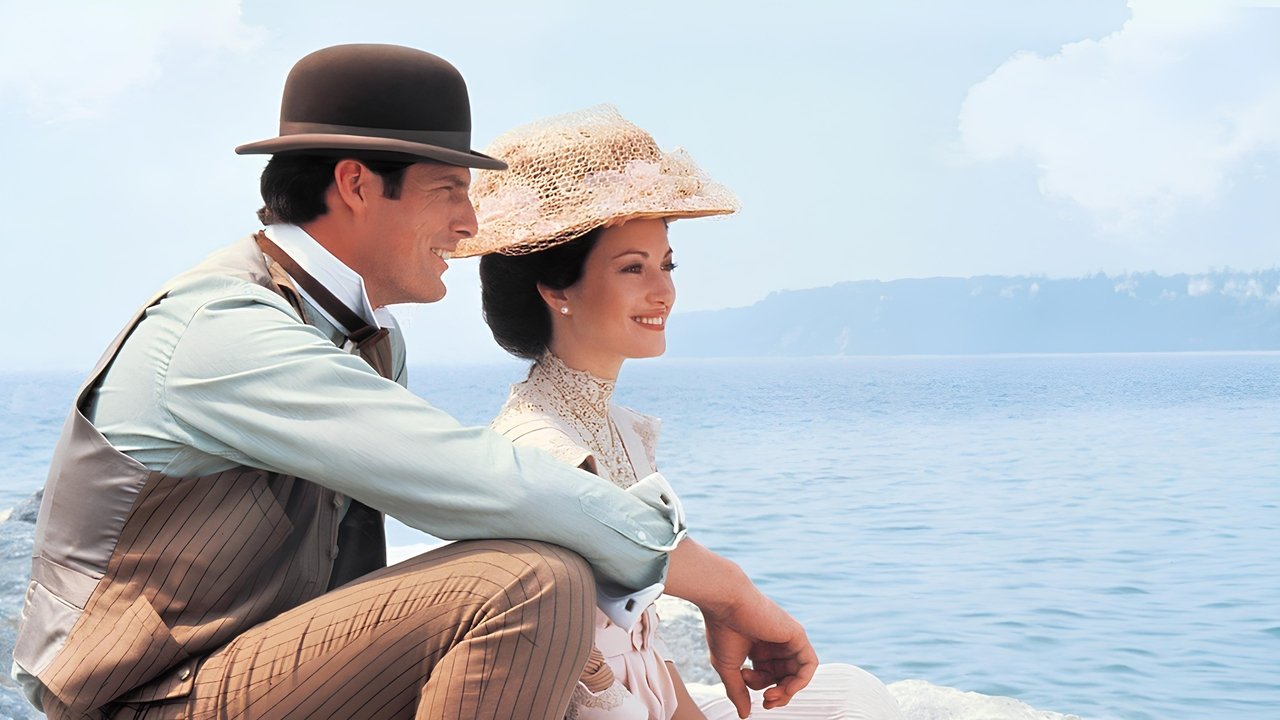
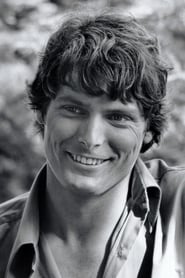
The film has a very good, but small, cast: Christopher Reeve was still reaping the rewards of the success of “Superman”, but that didn't stop him from putting in a lot of effort into this smaller work. The actor is a solid protagonist, and his work is one of the levers that moves the film forward and gives it quality. Next to him, we see the elegant Jane Seymour, still quite young, in a performance full of dignity and where she establishes excellent chemistry with Reeve. Christopher Plummer was less fortunate: the actor, whose credits and talent are beyond doubt, received a cliché and quite artificial character because the villain was necessary to the plot anyway, and had to be someone sufficiently worthy of our disdain.
This leads us to talk about the script, which has its merits and also many demerits: the story is based on a somewhat mystical passion between Richard Collier, a modern-day playwright, and Elise McKenna, a young and successful actress from the past. Right at the beginning of the film they meet when she, already elderly, gives him a watch and says a few short and mysterious words to him. Eight years later, he becomes fascinated by a young woman, portrayed in 1912 in a room in an old hotel, discovering her identity. He then decides to try self-hypnosis to go back in time and find her.
The script thus creates a kind of love at first sight, in which the object of passion is a photograph of someone who has long since passed away and who you have never met. Just the idea itself seems bizarre, and things don't get better when we introduce time travel and the notions of regression and self-hypnosis, which only the “new age” crowd will really value in some way. Perhaps it would have been preferable to travel through “traditional” time through some machine, portal or “wormhole”.
Technically, the film shines due to the choice of filming location (the hotel still exists and can be visited) and the design of the sets and costumes, full of details and well made, worthy of the Oscar nomination in 1981. The editing is quite regular, and the film unfolds without haste, but also without dull moments. The cinematography comes in joyful warm colors and the soundtrack is dominated by two distinct, but by no means incompatible, tonics: the excellent Rhapsody on a Theme of Paganini Op. 43, by Rachmaninoff, and a hypnotic and striking melody composed by John Barry.