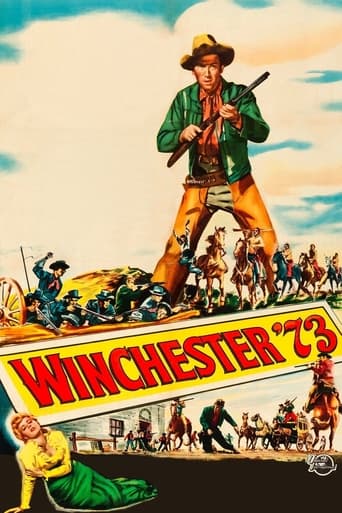
ウィンチェスター銃'73



あらすじ
何万挺に一挺という名銃ウィンチェスター。その銃を順次手にする人々を中心に悲喜こもごものドラマが展開し、全エピソードが一つになって終局を迎える。見事な構成の名作西部劇。
興行成績
興行収入: $2,250,000 (3億円)
※製作費・興行収入はTMDBのデータを参照しています。収支は(興行収入 - 製作費)で算出したFindKey独自の推定値であり、広告宣伝費や諸経費は含まれません (1ドル=150円換算)。
何万挺に一挺という名銃ウィンチェスター。その銃を順次手にする人々を中心に悲喜こもごものドラマが展開し、全エピソードが一つになって終局を迎える。見事な構成の名作西部劇。
興行収入: $2,250,000 (3億円)
※製作費・興行収入はTMDBのデータを参照しています。収支は(興行収入 - 製作費)で算出したFindKey独自の推定値であり、広告宣伝費や諸経費は含まれません (1ドル=150円換算)。
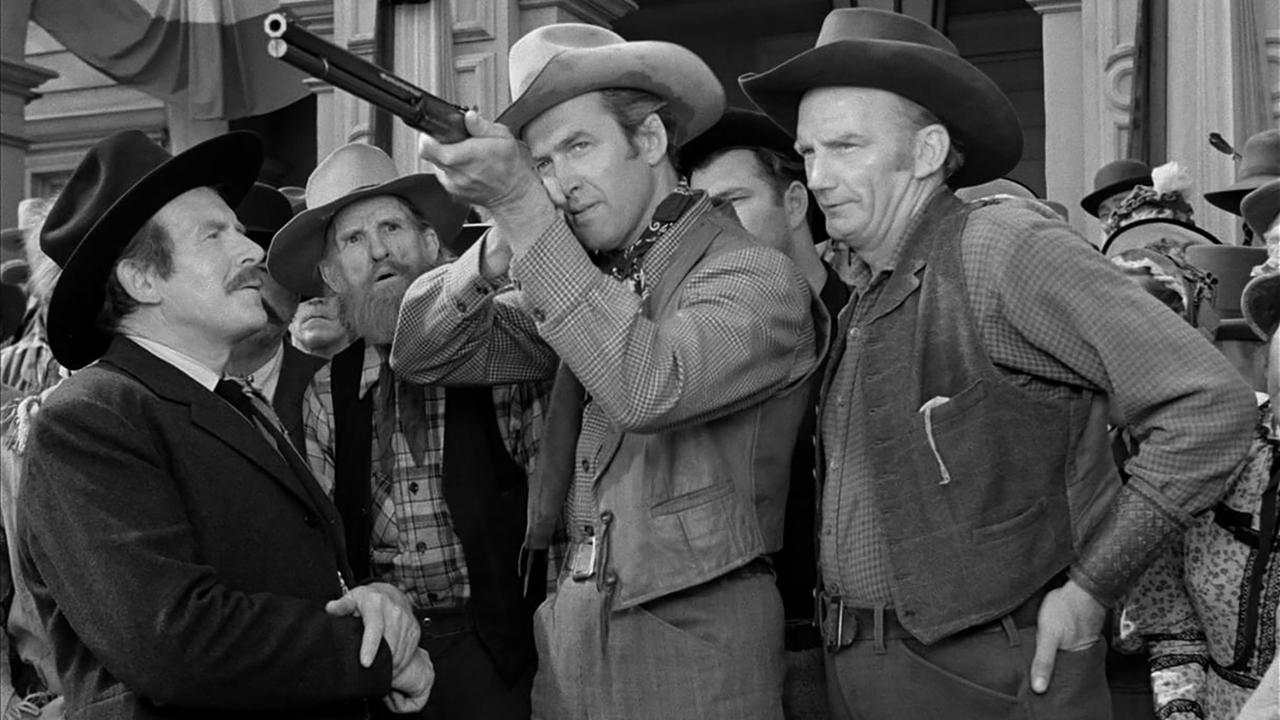
Some things a man has to do, so he does 'em. This is a story of the Winchester Rifle Model 1873 "The Gun That Won The West" - To cowman, outlaw, peace officer or soldier, the Winchester 73 was a treasured possession. An Indian would sell his soul to own one... Winchester '73 is the first collaboration between director Anthony Mann and actor James Stewart, a duo that would go on to create a run of superior Westerns that added a new psychological depth to the genre. The story sees Stewart as Lin McAdam, who is pursuing the man who killed his father. Riding into Dodge City with his trusty friend, Johnny Williams (Millard Mitchell), Lin runs into Dutch Henry Brown (Stephen McNally), the man he wants. But with Wyatt Earp (Will Geer) having taken all the guns from those entering the town, both men are unable to have the shoot-out that they are ready for. The men instead square up in a competition to win a Winchester 73 rifle, a competition that Lin eventually wins. But before he can leave town with the magnificent prize, Dutch ambushes him, steals the rifle and skips town fast. As Lin sets off in hate filled pursuit of both man and rifle, the rifle will changed hands a number of times, with each time adding another dimension as the day of reckoning for all approaches. Very much a benchmark for what became known as the so-called "psychological Western", Winchester '73 is basically a story of a decent man driven to borderline insanity by an event in his past. Though shot in black and white (the only one of the duos Westerns that was) the landscapes are still breath taking feasts for the eyes. The tone is set with the opening scene as Lin and Johnny on horseback, and in silhouette, amble over a hillside as they make their way to Dodge City. It's just the starting point that would see Mann use his vistas as a way of running concurrent with his characters emotional states. Stewart gives one of his finest and most intense performances as McAdam, proving once and for all that he was one of America's finest and most versatile actors. The support cast isn't too bad either. Shelley Winters is excellent as the sole female in amongst the machismo, while Mitchell, McNally, Geer and the always great Dan Duryea add further class to proceedings. There's even bit parts for Tony Curtis and Rock Hudson in here, though the latter playing an Indian brave is a stretch too far. Originally the film was a project for Fritz Lang, who even had the script ready to run. But Lang walked away from it, something that proved to be a blessing for Western fans. For as great as a director that Lang was, with Mann directing (and with a new script from Borden Chase & Robert Richards in hands) it set the wheels in motion to alter the course of the genre. Not only with the further efforts that Mann & Stewart produced, but also in who they influenced. The likes of Budd Boetticher, Nicholas Ray and Sam Fuller were all taking notes, and gleefully for the Western purists, they followed suit and carried the psychological torch still further. A big hit at the box office back on release, Winchester '73 is a magnificent film that still packs a punch in the modern age. 9/10
_**Dynamic James Stewart Western with a noir tinge**_ The prize rifle of a drifter (James Stewart) is stolen by his nemesis (Stephen McNally), apprehended by a gun-trader (John McIntire), involved in a cavalry vs. Indian clash, winds up in the hands of a man who struggles with cowardice (Charles Drake) before being swiped by a charismatic outlaw (Dan Duryea). Meanwhile Lin McAdam (Stewart) pursues it with his faithful pardner (Millard Mitchell). While "Winchester ‘73" (1950) was shot in flat B&W, it’s a compelling action-packed Western with noir touches highlighted by the notable cast, which also includes Will Geer and Shelly Winters (when she was young, fit and voluptuous, not to mention spunky). Also look for Rock Hudson as the lead brave Young Bull and Tony Curtis as a besieged cavalry trooper. The movie throws in Dodge City, Kansas, and a surprisingly congenial, almost bumbling (and too-old) Wyatt Earp (Geer) even though it’s clear that the film was shot in southern Arizona. For instance, the saguaro cactus is native to the Sonoran Desert and not within 800 miles of Dodge City. But Tascosa, Texas, works okay within the framework of the Southwest, I guess. Basically, you have to ignore some misleading geography and a dubious Wyatt Earp to enjoy the picture. The film runs 1 hour, 32 minutes, and was shot mainly in southern Arizona with studio stuff done at Universal Studios, California, with some exterior shots of Zion National Park, Utah. GRADE: B
“I haven’t felt this naked since I last took a bath” “You must have a long memory!”. Naked? That’s because sheriff Wyatt Earp (Will Geer) won’t allow guns in his town and these men had to scarper rather suddenly after they stole a pristine Winchester rifle from it’s rightful owner. You see, “McAdam” (James Stewart) had shot a postage stamp and won the rifle in a shooting contest against “Dutch Henry” (Stephen McNally). The latter man didn’t care much for that result so had bushwhacked “McAdam” and absconded with said gun. Except, they had no other weapons nor any bullets for the one they did have. When they arrive at a trading post, they encounter the wily “Joe” (John McIntire) who is awaiting “Young Bull” (Rock Hudson) and his tribe to arrive so he can sell them some guns. He takes a shine to the Winchester and so after some drinking and card-playing ends up taking it to his meet with the warlike chief who also decides he wants it. A little like a poisoned chalice, the gun then finds it’s way into a failed raiding party where it is almost repatriated with “McAdam” but instead goes with a character who is mixed up with some ne’er-do-wells who are soon under siege by officers of the law. When their leader manages to flee a coal-oil conflagration with it and “Lola” (Shelley Winters) things finally start to look like they are going to come full circle as we also discover that “Dutch” and “McAdam” are brothers and an unforgiving denouement amidst the ragged peaks looms large. I did find the ending a bit rushed, but otherwise this is a neatly crafted collection of stories that uses the gun as a conduit for tales of marauding natives, pioneering travellers and some good old (if rather undercooked) sibling rivalry. Winters never settled for the shrinking violet roles, and there’s plenty of starch in her corset here as the plot gathers pace; McIntire exudes a bit of calculating mischief and there is even a good old circling of wagons rolled in for good measure as the on-form Stewart and J.C. Flippen’s “Sgt. Wilkes” fend off some yelling Indians. This is a western in the best tradition: well produced, scripted and played out and it again shows that Jimmy Stewart was amongst the best in this genre.