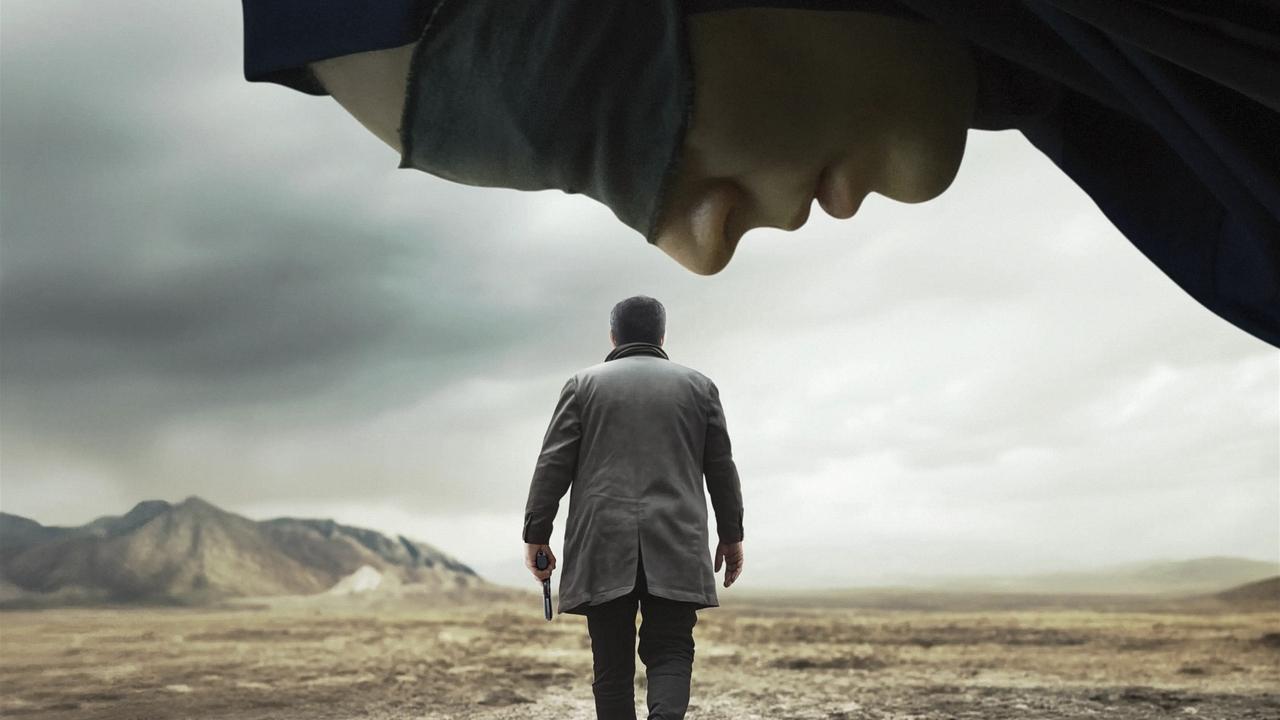
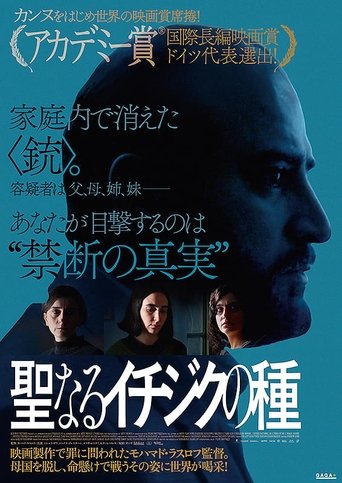
When “Iman” (Missagh Zareh) gets a promotion at work, he hopes it will lead to his family of wife “Najmeh” (Sohelia Golestani) and daughters “Sana” (Setareh Maleki) and “Rezvan” (Mahsa Rostami) being relocated to better accommodation so that the girls can finally have rooms of their own! He is now to be an investigator for the state, a stone’s throw from the judiciary, and an important job. He discovers quite quickly, though, that his is really little more than a rubber-stamping position for the prosecutors who are enforcing Iran’s increasingly Draconian laws. His workload is only increased by the evident volume of civil disobedience, and for his own protection he is given a gun. At home, his wife is conscious this new job will heap additional pressure on the family and that it’s more important than ever that they keep their noses clean. Their daughters are going to school and college and are experiencing the horrors inflicted on protestors at first hand. This becomes even more poignant when their friend “Sadaf” (Niousha Akhshi) is caught up with brutal consequences. With “Iman” more disconsolate about the compliant nature of his new job family life becomes strained. Then the gun goes missing. They tear their home apart but no trace. Has he left it somewhere? Has it been stolen? The shame that will be heaped upon him, not to mention the three years in jail, should he not find it. He begins to conclude that the thief must be one of his family, and so resorts to ever more extreme measures to force the culprit to own up. When that takes them all to his home village, things starts to come to an head that tests everyone’s mettle and challenges that which all of them have hitherto cherished. The drama itself is tautly paced and becomes almost visceral as the exasperation and panic sets in amongst parents who realise that nothing is now as it was. It’s also supported by some fairly ghastly UGC from mobile phones depicting the actions of the police as they clamp down on the women who are rebelling against the restrictiveness of what they see as an ever more oppressive theocracy that reduces them to positions of little better than slavery. The plot isn’t without it’s holes, and I found the denouement all a little bit unsatisfactory for a number of reasons, not least what auteur Mohammad Rasoulof allows the character of “Iman” to become, but it’s still a compelling critique of how even the most loving of relationships can come undone when pressure, hatred, fear and mistrust are allowed unfettered into an home that’s embedded within the infrastructure of a corrupt and savagely dogmatic regime.