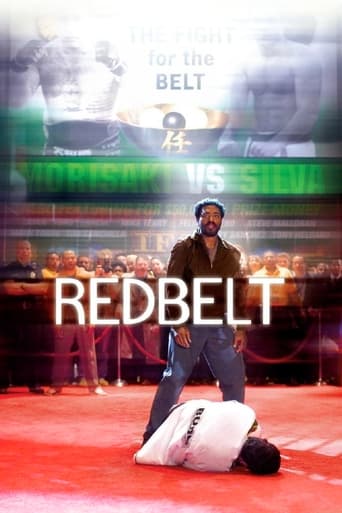
Redbelt
あらすじ
No synopsis available.
作品考察・見どころ
興行成績
製作費: $7,000,000 (11億円)
※製作費・興行収入はTMDBのデータを参照しています。収支は(興行収入 - 製作費)で算出したFindKey独自の推定値であり、広告宣伝費や諸経費は含まれません (1ドル=150円換算)。
No synopsis available.
製作費: $7,000,000 (11億円)
※製作費・興行収入はTMDBのデータを参照しています。収支は(興行収入 - 製作費)で算出したFindKey独自の推定値であり、広告宣伝費や諸経費は含まれません (1ドル=150円換算)。
監督: デヴィッド・マメット
脚本: デヴィッド・マメット
音楽: Stephen Endelman
制作: Chrisann Verges
撮影監督: Robert Elswit
制作会社: Sony Pictures Classics
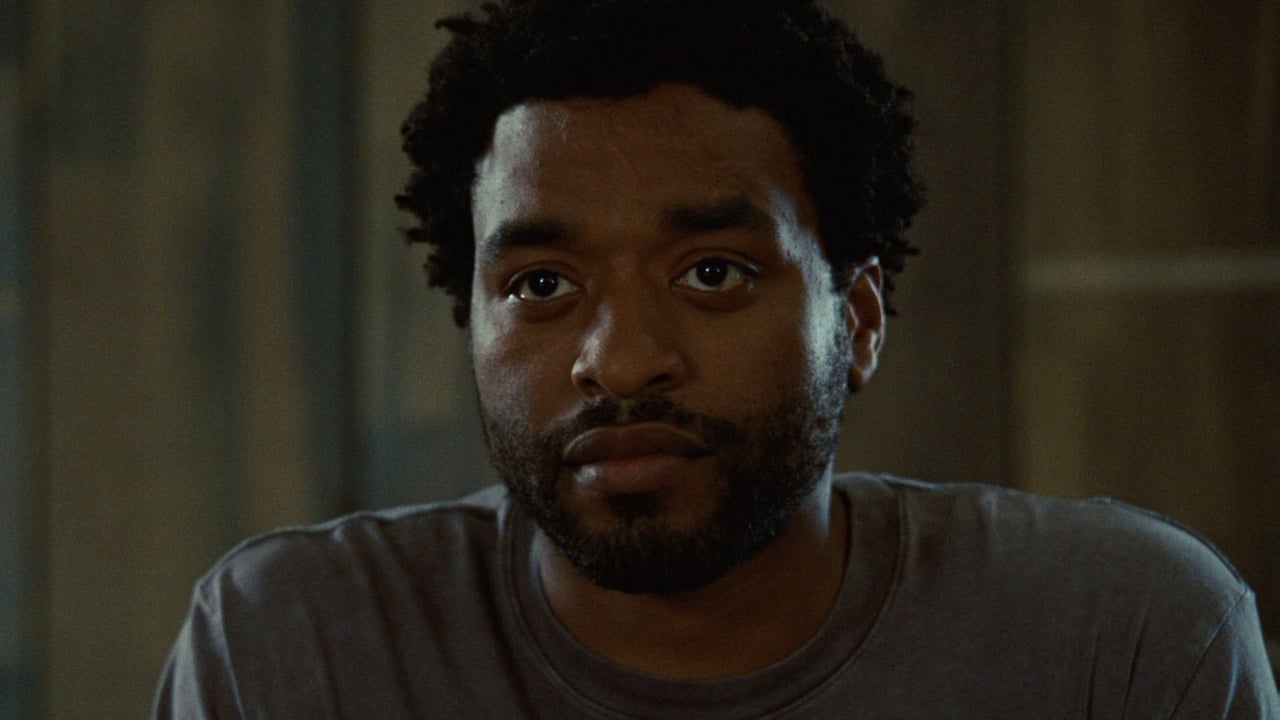
Redbelt may not be, though it’s still pretty good, David Mamet’s best, but it is for the most part an interesting sample of his work in that it showcases some of his most finely honed traits and, more importantly, it is proof that the true mark of a gifted filmmaker is the ability to elevate any genre he chooses to use as raw material (his Spartan is another good example, as is Steven Soderbergh’s Haywire); in this case what we have is a deconstructed martial arts film, complete with a Big Tournament at the end – but the events leading up to it, and how the tournament itself unfolds, are handled with Mamet’s characteristic ear for realistic dialogue, attention to detail, and patience; the necessary patience to allow the plot to develop as a natural and organic succession of characters’ choices and their corresponding consequences, as opposed to, well, a plot. As a result we are spared such clichéd sights as the Training Montage, for instance, or the Romantic Interest. The hero is Brazilian Jiu-Jitsu teacher Mike Terry (Chiwetel Ejiofor), whose mantra is “There is no situation that you cannot turn to your advantage.” In keeping with this, Mamet weaves a script where there are no wasted movements; as in a Rube Goldberg machine, every disparate element – idealistic sensei, shallow Hollywood star, troubled police officer, traumatized female lawyer, long-suffering wife, crooked club owners, shady businessmen, etc., etc., etc. – is interconnected with the others and all serve the story just like all roads lead to Rome. Even something so apparently random as some dude performing sleight of hand in bar in exchange for drinks will eventually fall into place and fit in with rest as neatly as a key going into a lock. Only the ending seems like it was taken straight out of a much inferior movie (think something like a Kickboxer or a Never Back Down), and represents somewhat of an anomaly among Mamet’s filmography which, mostly for better but sometimes for worse, is nothing if not consistent – consider 1988’s Things Change, whose deus ex machina not only had a better set-up but was much easier to swallow because the movie was, after all, a comedy. But here the fanciful climax feels tacked on, especially after the effort made by both the filmmaker and his expert cast to invest the story with a palpable sense of realism. To go out of his way like this, Mamet clearly cared a great deal about the main character – and so will most people who watch the movie, though not necessarily, at least in my case, at the expense of inner logic.