
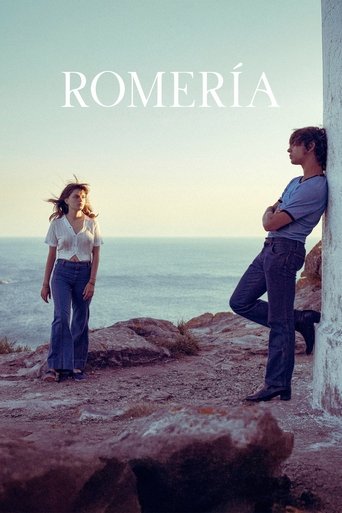
Romería
あらすじ
No synopsis available.
予告・トレイラー
興行成績
製作費: $3,735,296 (6億円)
興行収入: $2,081,503 (3億円)
推定収支: $-1,653,793 (-2億円)
※製作費・興行収入はTMDBのデータを参照しています。収支は(興行収入 - 製作費)で算出したFindKey独自の推定値であり、広告宣伝費や諸経費は含まれません (1ドル=150円換算)。
No synopsis available.
製作費: $3,735,296 (6億円)
興行収入: $2,081,503 (3億円)
推定収支: $-1,653,793 (-2億円)
※製作費・興行収入はTMDBのデータを参照しています。収支は(興行収入 - 製作費)で算出したFindKey独自の推定値であり、広告宣伝費や諸経費は含まれません (1ドル=150円換算)。
監督: Carla Simón
脚本: Carla Simón
音楽: Ernest Pipó
制作: María Zamora
撮影監督: Hélène Louvart
制作会社: Elastica Films / Romería Vigo / ZDF/Arte / Dos Soles Media / Ventall Cinema
Family secrets can pose an irresistible temptation to those left out of the loop, yet those hidden matters often remain out of sight for a reason. However, when circumstances necessitate their revelation – especially for those on the outside looking in – those mysteries may be forced to emerge, regardless of how painful, awkward or shocking they may be. And those are the very conditions faced by an 18-year-old woman in the latest, and semi-autobiographical, feature from writer-director Carla Simón. Set in 2004, the film follows the odyssey of Marina (Llúcia Garcia), an adopted adolescent who makes a pilgrimage (hence the movie’s title) to the Atlantic Coast Spanish port of Vigo, where she was conceived by her now-long-deceased biological parents and the home of her blood relatives. Marina is about to enroll as a university film student and seeks to apply for a government grant to cover the funding. But, to complete the paperwork, she needs to provide proof of her parentage. Specifically, she needs to obtain a sworn attestation about the identity of her father (Mitch Martin), whose records at the time of his death indicated he had no children. That discrepancy, however, can be corrected with testimony from her grandfather (José Ángel Egido), whom she has never met. In fact, she has never met any of her relatives, which is another reason for the trip, an opportunity to help her discover her roots and, by extension she hopes, her own identity. She also hopes to learn more about her biological parents, since her late mother’s diary is the only tangible connection she has to them. Marina initially connects with her two genial uncles, Lois (Tristàn Ulloa) and Iago (Alberto Gracia), as well as a number of cousins, all of whom she universally makes positive connections with. However, over the course of her meetings with her estranged family, she slowly begins learning unflattering information about the character of her grandparents and disturbing revelations about her parents, disclosures more stunning than anything contained in her mother’s diary. Revelations about drug addiction, health issues, a freewheeling lifestyle and inadequate, indifferent familial support surface, giving Marina pause to consider the implications of what she learns (and may have ultimately been better off not knowing were it not for the need to obtain the attestation). While the film examines a number of touchy issues on multiple fronts, and undoubtedly provides a much-needed therapeutic outlet for the filmmaker, its disclosures nevertheless are a little too subtle and meandering, not coming across as powerfully or demonstrably as they probably could. Granted, prevailing conditions in the 1980s (where Marina’s life story begins) weren’t as accepting and tolerant as today (or even during the time frame in which the narrative here is set). But, considering the nature of the story and its messages, the picture feels underplayed, lacking the immediacy, urgency and indignation that it should invoke. In that regard, then, this offering feels underdeveloped. It also incorporates segments that don’t mesh especially well with the overall production, such as a protracted flashback re-creation of the romance between Marina’s parents based on her mother’s diary, much of which had already been revealed through conversations between the protagonist and her family members, making for a somewhat redundant exercise. The character of the flashback is also inexplicably surreal at times, a storytelling approach that may be visually interesting but seems out of place. As a consequence, “Romería” often feels like a lost opportunity, one in which the director may have been too close to the material to do it proper justice. This fact-based biography/domestic drama might have been beneficial to the personal well-being of the filmmaker, but, as a work of cinema, it comes up short, especially in shining a bright light on the sins of the past that must not be forgotten or allowed to occur again.