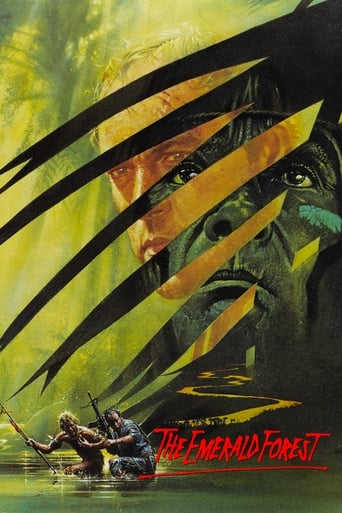
The Emerald Forest
あらすじ
No synopsis available.
予告・トレイラー
興行成績
興行収入: $24,467,000 (37億円)
※製作費・興行収入はTMDBのデータを参照しています。収支は(興行収入 - 製作費)で算出したFindKey独自の推定値であり、広告宣伝費や諸経費は含まれません (1ドル=150円換算)。
No synopsis available.
興行収入: $24,467,000 (37億円)
※製作費・興行収入はTMDBのデータを参照しています。収支は(興行収入 - 製作費)で算出したFindKey独自の推定値であり、広告宣伝費や諸経費は含まれません (1ドル=150円換算)。
監督: ジョン・ブアマン
脚本: Rospo Pallenberg
音楽: Brian Gascoigne / Junior Homrich
制作: ジョン・ブアマン / Edgar F. Gross
撮影監督: Philippe Rousselot
制作会社: Christel Films / Embassy Pictures
**_Good rainforest movie marred by eye-rolling bits and tacked on eco message_** An American engineer (Powers Boothe) takes his family to the Amazon Basin to build a major dam, but his son suddenly disappears and there are rumors that he may have been taken by a tribe called The Invisible People. Ten years pass and he’s still looking. Will he find him? Will the son (Charley Boorman) recognize him? Meg Foster is on hand as the wife/mother. “The Emerald Forest” (1985) is similar to “A Man Called Horse” (1970) story-wise, albeit involving a teen, plus featuring the Amazon setting of “Fitzcarraldo” (1982). It influenced later movies like “Dances With Wolves” (1990) and, as far as ‘look’ goes, “Apocalypto” (2006). Being helmed by John Boorman, it’s a quality production. Unfortunately, this is the least of these movies and therefore justifiably obscure. It’s not just the unnecessary environmental message in the second half but, worse, the laughable implication concerning a rain dance. (Why Sure!) Isn't it ironic how “Natives” in the Americas are now adorned with god-like powers and sage-like stature in cinema? (I put ‘Natives’ in quotations because they’re actually the progeny of settlers from Asia via Beringia). If these Amazonian Indians had that much power, then taking care of the technologically advanced encroachers or enemy tribes would be a piece of cake. Another criticism is the unrealistic portrayal of The Invisible People. It’s way too paradisal with too little emphasis on the mundaneness and hardships inherent to such a life in the deep equatorial forest. For instance, the nubile females appear overly fresh and immaculate for living amidst gross jungle challenges. In other words, they seem like girls who’ve lived a relatively soft life with modern conveniences (I’ve seen the real-life articles/photos in National Geographic and they’re very different). Both “Apocalypto” and “At Play in the Fields of the Lord” (1991) offer a less fantastical portrayal. The story was inspired by a supposedly true event, but the man who lost his son to a mysterious tribe was Peruvian, not American, not to mention he was a lumberjack rather than an engineer. It took sixteen years for him to find his son, who had been totally assimilated into the primitive culture. Responding to these deviations, it was said that the screenplay was based on several real-life stories, not just this one. The film runs 1 hour, 54 minutes, and was shot in Brazil with additional studio stuff done in England. GRADE: C+