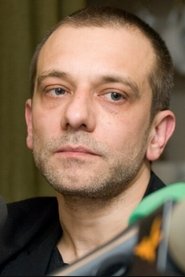
Dimitri Venkov in conversation with Alexandra MacGilp for Cannibal Manifest exhibition catalogue
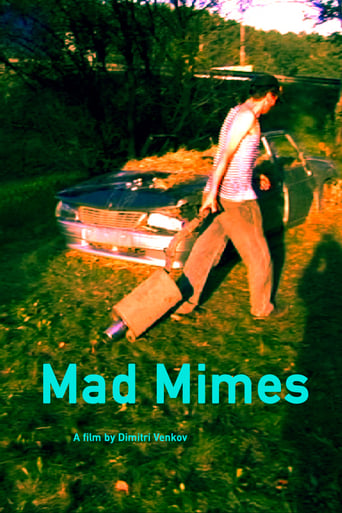
AM: What inspired The Mad Mimes and how did it develop while you were making it?
DV: One of the lasting impressions of my formative years was a discovery of Jean Rouch’s ethno-fictions. There I saw a narrative mode that was neither documentary nor fiction, rather it went back and forth between them creating uncertainty in regards with the nature of the material and the film itself. Half-consciously I ended up reproducing this model in my film where I tried to present a credible situation at first and then push the limits of plausibility without completely destroying it, without slipping into mockumentary mode where everything becomes a parody.
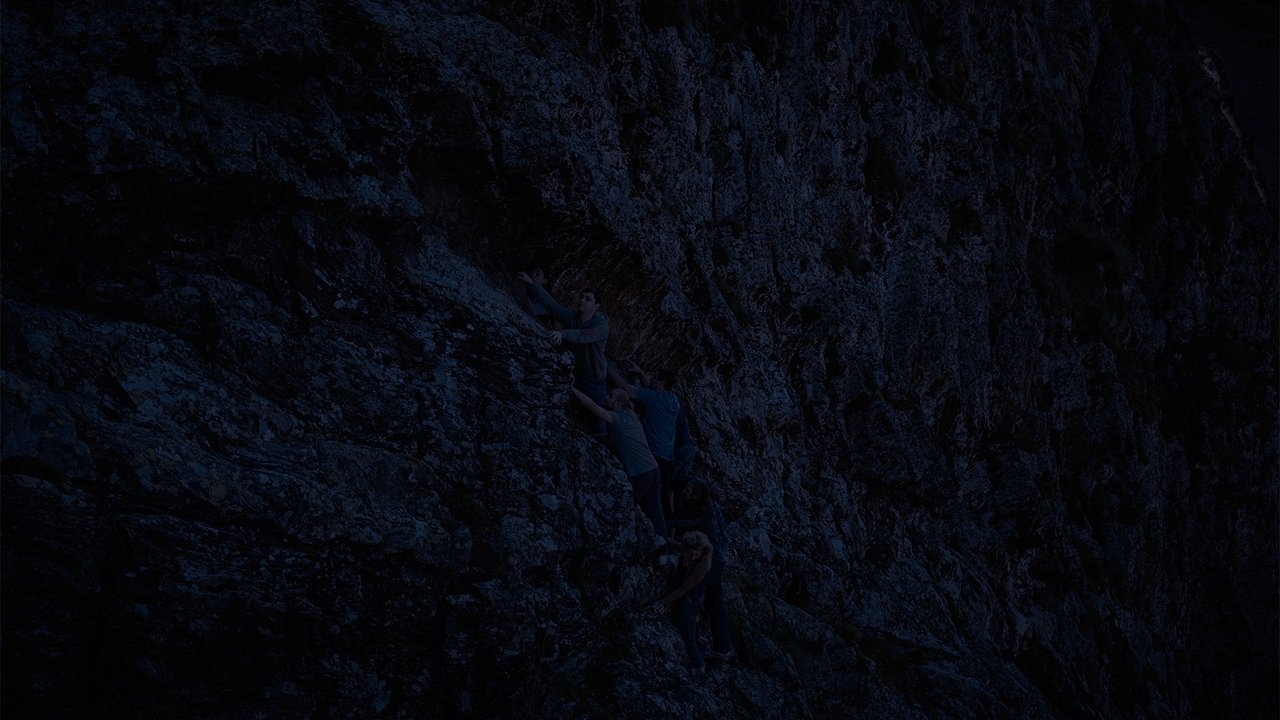
I had the idea for the film as I was walking with some friends through a park next on the outskirts of Moscow and saw an “island” delineated by a highway on the one side and a creek on the other. I imagined a tribe living there in isolation and wondered what their culture would be like. To make the film I followed an ethnographic procedure. I first developed a script and shot the scenes with the tribe including the ritual. After that, I did a more theory-oriented research on mimesis to create the experts’ commentary on the lifestyle and practices of the tribe. The film took about a year and a half to complete.
AM: Which anthropologists do you quote from in The Mad Mimes? How do you feel their work is relevant in the context of contemporary Moscow?
DV: I quote classical works by Levy-Strauss, Malinowski and others. Michael Taussig’s discussion of mimesis and liminal phenomena was particularly instrumental in understanding and interpreting the tribe’s activities. I think theory is what made the image of a tribe living on the outskirts of a city and a group of experts commenting on it seem convincing to many people. I wanted to draw attention to the power of expertise that can make us accept the most outlandish narratives as plausible or even real. Rather than demonstrating a relevance of theory to a context, I used it as a legitimizing tool for a material that is not believable in both its conception and execution.
AM: After your recommendation I read Mimesis and Alterity by Michael Taussig and was struck by his exploration into how the cultural practices of those on the outskirts offer a valuable critical lens through which to view the world capitalist economy. In your film how does the existence of the ‘discovered’ people relate to life in today’s Moscow?
DV: In the last year we have felt the repercussions of the drop in oil prices coupled with financial sanctions, which stripped the country of an illusory stability that was the holy cow of the first decade of Putin’s rule. This made clear how dependent and precarious the Russian economy was. That, coupled with a very unequal distribution of oil wealth and a continual curtailing of social security, may in a way resemble a situation where a tribe has to scrape out subsistence along a major highway ridden by trucks full of precious cargo.
AM: I first saw Jean Rouch Les Maitres Fous as a student. I am still very interested in the interpretation of the ceremony of the Hauka cult it documents as a form of resistance and release from the harsh reality of life under British colonial rule, although I am aware that there are other interpretations. How do you respond to this seminal film? You have chosen a notorious scene and reinterpreted it humourously. Where a dog is eaten in Rouch’s film, in yours it is a raw chicken.
DV: Les Maitres fous was the starting point for the ritual. I used its structure but instead of the colonial authorities my tribe mimics the life on the road. Rouch’s conclusion was that the Hauka ritual served a therapeutic purpose, it helped the adepts of the cult reconcile with the colonial oppression. I felt that the political and sociological dimensions were lacking from his analysis and that I needed to make a step in that direction. I went on to study Melanesian cargo cults and saw how some of them evolved from basic forms of defiance of traditions and authorities to proto-independence movements, commercial enterprises and community-building organizations. I looked for ways that cults, although functioning on a symbolic level, translate their workings into a social reality. In the film I wanted to demonstrate how the real and the symbolic influence one other and how mimetic practices produce tangible results.
AM: The Mad Mimes obliquely discusses conditions in post-Soviet Russia. What is the importance of humour for you? Is the figure of the Holy Fool or yurodivy relevant here?
DV: I wrote my master’s thesis on the evolution of soviet comedies seen through the lens of Mikhail Bakhtin’s theory of carnival so I was well aware of the anti-authoritarian and subversive potential of humor when I was making Mad Mimes. In the film, the tribesmen act a kind of yurodivys vis-à-vis the experts creating situations that increasingly defy interpretation. The tribe pushes the limits of experts’ judgment but they respond to it with intellectual composure and remain convincing. However wild and unbelievable the tribe’s actions get, the experts always have a rationalization for it. This structure is meant to elicit a critical protest in the viewer and problematize the way we watch films and believe what they present.
AM: Tell me about the actors in your film? How did you cast the ‘tribe members’ and the ‘anthropologists’? Is your film also a portrait of the artscene in Moscow?
DV: I was looking for actors who would perform the type of activities described in the ritual without the need of acting anything. That is why I invited performance artists or the ones with strong performative qualities. When there came the moment to cast the experts, I found that critics and theoreticians worked best for these parts because they were actual intellectuals, something that seemed difficult to convincingly imitate. From these decisions arose the structure of the film where artists perform and critics interpret. In Moscow it is often regarded as a portrait of the art scene or an image of an ideal artistic community but this was not my conscious intention to begin with. Only at a later stage did I realize that I was presenting a utopian vision of an autonomous community bound by a quasi-artistic practice whose only product was its being-together. In this sense the film is a narration of my encounter with the Moscow scene where I saw a great potential for collective being and action.