FindKey

FindKeyは、100万件を超える映画・ドラマ作品、そして数百万人の人物データと独自の16類型CTI診断を統合した、日本初の感情特化型映画レコメンドエンジンです。

Find (見つける) + Key (鍵・正解)

映画に限らず、人生のヒントを見つける場所です。

FindKeyについてロケ地 (試験中)利用規約プライバシーポリシーお問い合わせ
© 2026 Bennu Inc.TMDB Logo

本サービスはTMDB APIを利用していますが、TMDBによる推奨・認定を受けたものではありません。

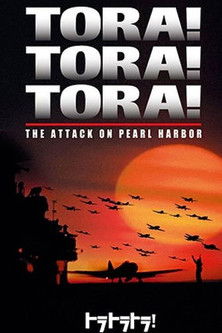
トラ・トラ・トラ!
トラ・トラ・トラ!

トラ・トラ・トラ!

19702h 24m★ 7.2戦争履歴ドラマ

あらすじ

1941年。日本軍はアメリカ軍との戦争で奇襲を仕掛けることを決断する。その作戦を成功させるために水面下で準備を進めるが、アメリカ軍は日本軍の暗号を解読し、攻撃を察知していた。両国の外交官は、政策で関係の修復を試みるがうまくいかず。そんな中、ハワイ真珠湾への攻撃が開始され、奇襲作戦は成功を収める。

作品考察・見どころ

日米両国の視点から歴史的瞬間を等距離で描き出す、空前絶後のリアリズムが本作の真骨頂です。緊迫感を煽る徹底したドキュメンタリータッチの演出は、国家間の思惑と情報の錯誤が招く悲劇を鮮烈に浮き彫りにします。CGのない時代に実機と精巧な特撮が織りなす圧倒的な映像美は、現代の作品をも凌駕する凄まじい実在感を放っています。 山村聰やマーティン・バルサムら日米の名優たちが体現する、軍人としての矜持と葛藤が魂を揺さぶります。単なる勧善懲悪を超え、人間の手には負えない巨大な運命のうねりを冷徹かつ情熱的に捉えた本作は、戦争映画という枠を超えた究極の人間ドラマとして、観る者の心に深い余韻を残し続けるでしょう。

興行成績

製作費: $25,485,000 (38億円)

興行収入: $37,150,000 (56億円)

推定収支: $11,665,000 (17億円)

※製作費・興行収入はTMDBのデータを参照しています。収支は(興行収入 - 製作費)で算出したFindKey独自の推定値であり、広告宣伝費や諸経費は含まれません (1ドル=150円換算)。

口コミ

あなたの評価を記録する

予告・トレイラー

配信サービス

レンタル・購入

Amazon Video
Apple TV Store
Google Play Movies
FOD

キャスト

マーティン・バルサム
マーティン・バルサム
Admiral Husband E. Kimmel
山村聰
山村聰
Admiral Isoroku Yamamoto
ジェイソン・ロバーズ
ジェイソン・ロバーズ
General Walter C. Short
ジョセフ・コットン
ジョセフ・コットン
Henry L. Stimson
三橋達也
三橋達也
Commander Minoru Genda
E.G. Marshall
E.G. Marshall
Colonel Rufus S. Bratton
田村高廣
田村高廣
Lt. Commander Mitsuo Fuchida
James Whitmore
James Whitmore
Admiral William F. Halsey
東野英治郎
東野英治郎
Admiral Chuici Nagumo
Wesley Addy
Wesley Addy
Lt. Commander Alwin D. Kramer

スタッフ・制作会社

監督: Richard Fleischer / 深作欣二

脚本: Ladislas Farago / Larry Forrester / 菊島隆三

音楽: ジェリー・ゴールドスミス

制作: Elmo Williams / Darryl F. Zanuck / Richard Fleischer

撮影監督: Charles F. Wheeler / 佐藤昌道

制作会社: 20th Century Fox / Toei Company / Williams-Fleischer Productions

TMDB ユーザーのレビュー

lwpcolonel
lwpcolonel

First off, this is a very good historical fictionalization of an epic event. Many parts are very accurate whereas others are more or less. This is after all a Hollywood movie, NOT a documentary such as "The World At War", so we can't be too critical about perfect accuracy.

Originally it was supposed to be directed by two directors, 1 for the American story line, and Akira Kurosawa, for the Japanese story. There were rumored difficulties between Mr. Kurosawa and the American studio bosses so Mr. Kurosawa left the production despite having an uncredited role in scripting the Japanese part of the screenplay.

I have read recently that the version that was being shown, of the historical account in the movie, was different than the conventional history's perspective. However, I would say that is only in demonstrating, theatrically, how Admiral Kimmel and General Short, who were scapegoats and put through rigorous Congressional Hearings after the actual event, may have taken ample precautions. That their shortcomings were due to communications being delayed or intelligence reports being withheld. I saw it in the movie theater in 1970, and many times since and have found it to be a very fair and well done "Hollywood" representation of the essential history of an important historic event.

The movie is essentially well acted, and believably presented with a few surprising disappointments. The Battleship Nevada was depicted with an inaccurate arrangement of its main batteries. In reality it had 10-14 inch guns, a 3-gun mount with a twin "Superfiring" turret over it, on the Bow and the Stern. Not 4, 3 gun mounts, (triple would mean all 3 guns were connected and couldn't be aimed independently which was retrofitted in the 1930s). When you see a ship that says Nevada on it and it isn't correctly laid out it is hard to believe the rest of the movie, particularly where details about ships, planes, equipment, facilities and ordnance were important characters in their depicted historic roles.

Some actual footage of the carnage at Pearl Harbor was used, including the Battleship Arizona conflagrating (exploding). As Docu-dramas go, Tora-Tora-Tora is among the best and superior to "Midway", which used some of the same footage and sound effects having been Produced by many of same people. I mentioned the aforementioned criticisms because at the film's beginning it has a Notation, "True To Historic Fact" and expands on that statement. In reality few films or testimonies can live up to 100% accuracy and weighted relevance, but Tora-Tora-Tora does have me returning to re-experience it, and not generally to look for more errors but rather because it is an overall worthwhile film.
Per Gunnar Jonsson
Per Gunnar Jonsson
★ 7

I remember viewing this film as a kid shortly after it came out in Sweden. At that time I was not impressed. I was expecting an action filled war movie and what I got was a boring movie where the good guys got beaten up at the end. I do not think I even new anything about the real events in Pearl Harbor at the time.

Naturally I view this movie in a somewhat different light and now and when re-watching it yesterday evening I enjoyed it quite a lot. I cannot help but wondering at the historical accuracy though. If someone would have told me that this was nothing but a Hollywood script, and a predictable at that, I would probably not have doubted it.

Did all these blunders really take place? That the Japanese where not playing with all their cards on the table is clear but there where so many screw-ups all over the place. Sightings not being reported, communications a mess everywhere, people asking for confirmations in absurdum, lining up the planes like ducks on a shooting range etc. etc. If this is really what happened then some of those movie scripts that seems so ridiculous maybe are not as ridiculous as one might think?

Naturally the film has the drawback of being predictable. What else can you expect when it is supposed to depict actual, well known, events? I think I would have felt that it was predictable even if I did not know what was supposed to happen though. Even so it is an enjoyable, well done, movie as far as I am concerned.

CinemaSerf
CinemaSerf
★ 7

This is told a little in the style of “The Longest Day” (1962) as it shows us both sides of the preparations for the attack on Pearl Harbor in 1941. With the US having moved it’s Pacific fleet from the safety of San Diego to an altogether more vulnerable location on Hawai’i, Admiral Kimmel (Martin Balsam) arrives to take command amidst considerable concern from his advisors - across the services, that the Japanese could attack with relative ease. Meantime, across the ocean the last vestiges of resistance to Japan’s alliance with the Nazis are being eroded and with Admiral Yamamoto (Sô Yamamura) now in charge of the imperial Navy, the momentum to attack becomes unstoppable. What might be a game-changer for the attackers is the ability to drop torpedoes from aircraft. The harbour was hitherto deemed to be too shallow for those to be effective, but the skilful airman Genda (Tatsuya Mihashi) thinks that with practice and a certain amount of audacity he can make this method of precision bombing work. In Washington D.C. the motions of diplomacy are still being gone through, with Secretary of State Cornell Hull (George Macready) and the Ambassador (Shôgo Shimada) trading political niceties. The Americans can intercept communications to and from Japan, but of course nothing is clear enough to convince President Roosevelt to commit the enormous resources required to guarantee the safety of their bottle-necked base. With the principal characters now established, the film illustrates just how things panned out on that fateful day, and with quite startling visual effect. What I did like about this dramatisation is that it largely focussed on the events leading up to December 7th without turning it into a personality contest. There are no glamour boys, on either side, for us to worry about. It isn’t at all sentimental, but instead quite a matter of fact reportage of just how the ruthlessness on one side was met by the paralysis on the other. The photography offers us quite a detailed analysis of just how the formations worked, of how the waves of aircraft used what was clearly copious amounts of meticulously gatheted intelligence to target not just the warships, but the adjacent air force bases that soon proved easy pickings. It isn’t trying to be a documentary, and of course there are dramatisations here, but by having both sides on this conflict present their own version of the proceedings leading up to and during the assault, it delivers us an authentic looking version of an history. The chronology also works well, darting from Tokyo to Pearl to Washington and developing each emerging strategy compellingly. The acting and writing are all adequate enough and provide all we need to tell a story that all-too-easily speaks for itself.

おすすめの作品