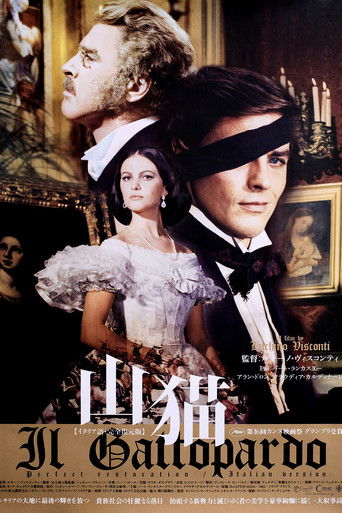
山猫
あらすじ
No synopsis available.
No synopsis available.
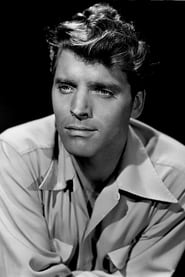
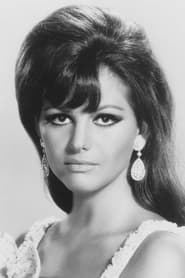
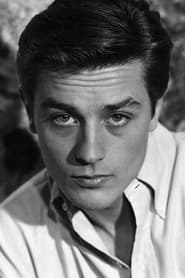
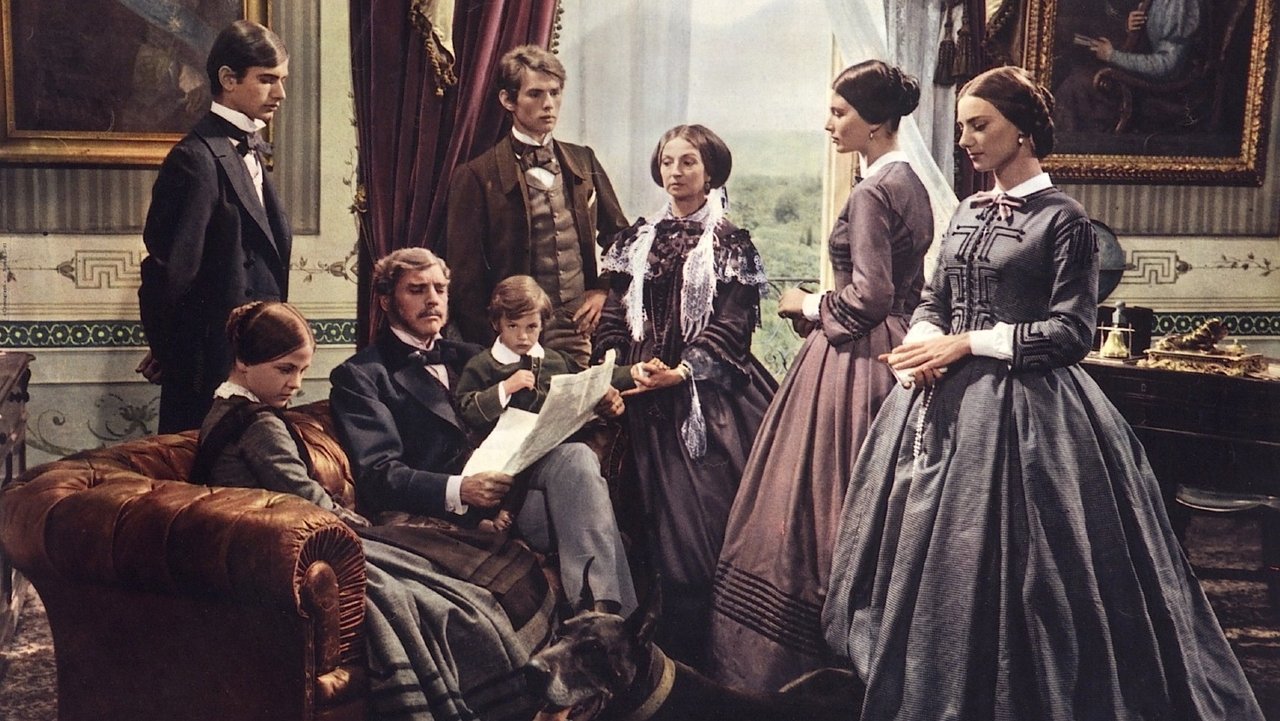
I was given the blu-ray of this as a gift recently and what a lovely, thoughtful present that proved to be. The photography is glorious - the light is brilliant. Visconti delivers a truly captivating period piece but with none of the shallowness of many other costume/historical dramas. It features a magnificent performance from the gently aristocratic, classy Burt Lancaster as a Sicilian Prince coming to terms with the absorption of his kingdom into the newly unified Kingdom of Italy. The trials of love, war, the lavish and the poverty are all expertly and delicately portrayed and I really did get a sense of the fragility of the times. Alain Delon and Rina Morelli are superb, as is Claudia Cardinale and Nino Rota provides some sumptuous orchestrations to help all along. Knowing much about the history of the time isn't essential, it all unfolds wonderfully...
Elegy for the Aristocracy Luchino Visconti's 1963 masterpiece, Il Gattopardo, does not merely narrate the historical transformation of an era; it is also a death hymn for a class. On the hot, dusty soil of Sicily, as the elegance of an age slowly turns to embers, Visconti invites his audience to history's most sorrowful ball. Prince Fabrizio Salina (Burt Lancaster) is the representative of a glorious past: with his nobility, wisdom, and dignity, he is both the honor and the last scion of his lineage. However, the world's order is changing. As kings, revolutionaries, and the nouveau riche take the stage, the aristocracy represented by Salina is in a state of elegant collapse. The Prince knows he cannot stop this change; he cannot slow down time, he cannot preserve his values, he can only watch what is happening. This observation—with melancholy, acceptance, and a touch of grace—is the heart of the film. Drawing from his own aristocratic origins, Visconti offers neither praise nor hatred. His camera portrays the aristocracy not as an ideology, but as a state of mind: one where beauty, discipline, and refinement converge with pride and helplessness. In the film's magnificent ball scene, the weary expression on the Prince's face summarizes everything: the music still plays, the dance continues, but he has already passed into history. Il Gattopardo combines the aesthetics of the aristocracy with the weight of its downfall. The sounds of the waltz echoing through the ballrooms are now merely the echo of a bygone era. As new generations——like Tancredi, portrayed by Alain Delon—rise, the old generations are compelled to make a graceful retreat. Visconti's rendering of these scenes is as dignified as a funeral rite, almost like a painting. The film's pace is slow because downfalls are not experienced in haste. Each frame lingers to make one feel the texture of an era; the costumes, facial expressions, and beads of sweat merge with the weight of the Sicilian sun. These details create the film's sense of "grandeur." Here, slowness is not an aesthetic choice, but a form of mourning. In the end, The Leopard is like the funeral ceremony not only of the Italian aristocracy but of an entire "old world." As modern times advance, nobility and moderation give way to ambition, self-interest, and new forms of power. Visconti narrates this inevitable transformation not with tears, but with an elegant acceptance—as if echoing Tancredi's words: "If we want things to stay as they are, things will have to change!"