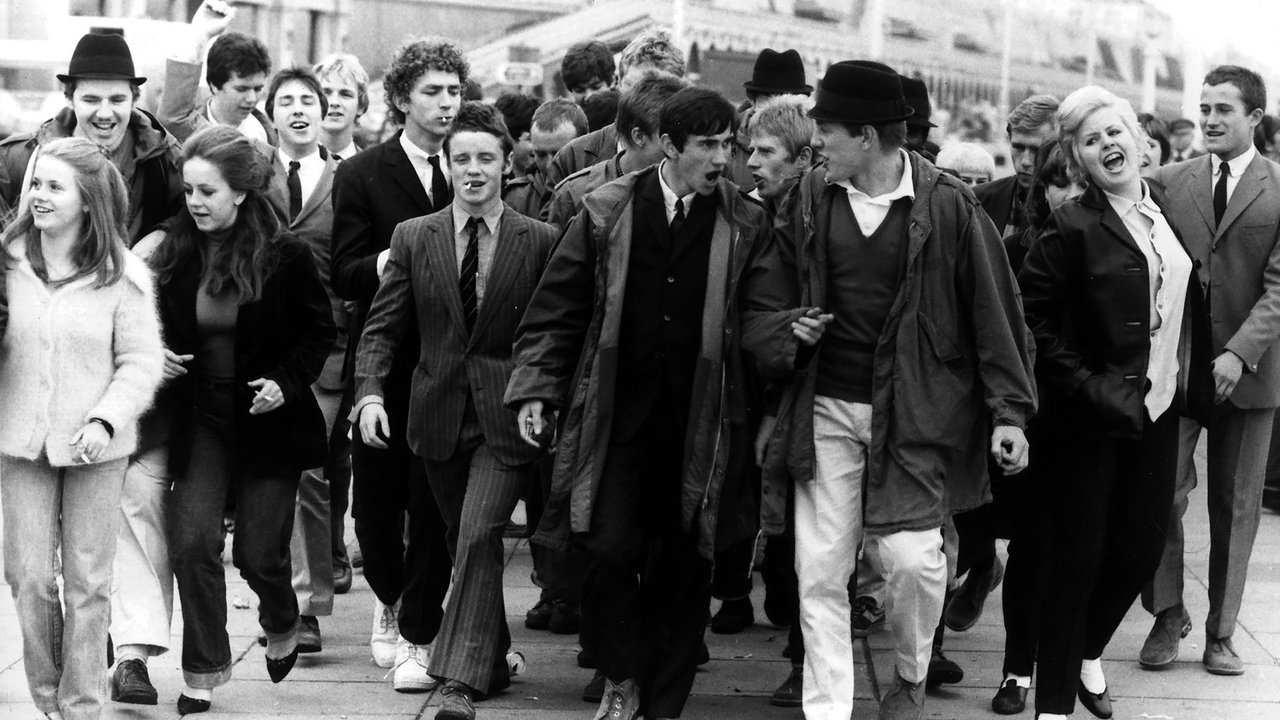
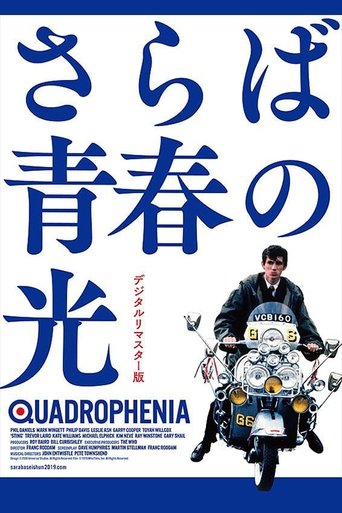
Brought up indifferently by parents who couldn't care less, "Jimmy" (Phil Daniels) goes through the motions at work only so he can afford to live the life of a pill-popping "Mod" riding around on his beloved Lambretta scooter. He's in his element, initially, but the adrenalin rushes start to wear off and his search for more exhilaration takes him on a trip to Brighton where an all out battle ensues on the beach with the motor-cycling "Rockers". The results of that opens his eyes a little to the realities of life but now he struggles with adjusting and this leads to a sense of loneliness, isolation and even paranoia. The film is accompanied by The Who's eponymous soundtrack and it's at these points it is most effective, presenting a poignant and rather bleak look at pre-Thatcherite Britain that illustrates just how little hope there was for many and at how almost tribal existence could be on the streets fuelled with conflict, depression and confusion. At times it's a really intense and well focused drama and Daniels is ideally suited for his character. The rest of it is all a bit so-what, though. This hasn't aged particularly well and though maybe unfair to review 40-off years later, it's largely lost what impact it certainly had at the time and is largely devoid of even the darkest of humour to lighten the downbeat mood. Sure, it's brutal and violent at times, the language is honest and authentic and it depicts elements of racism and intolerance effectively, but the plot is a little like life itself. A meandering and frequently disinteresting series of occurrences that rarely merit remembering. It started many a career but somehow even that just seems to reinforce it's stereotyping analysis of society - as Franc Roddam saw it. It's to be commended for the intensity and clever use of hand-held photography but, perhaps because it is so London-centric, I just found it somewhat alien, over-rated and all just a little bit pointless. Maybe that was the whole point?